




Hirondelle?
Swallows, swifts, and bats have adapted to city life and use buildings as breeding sites. Did you know that these species are protected, just like their breeding sites?
Since the presence of these species is often unknown, breeding sites sometimes disappear as a result of work on building facades or roofs.
How can you recognize a swallow?
Swallows are smaller than swifts and have less elongated wings. Their natural nests are built with mud and are often clearly visible.
In Swiss towns and villages, there are essentially two species of swallows: the house martin and the barn swallow.
The Window Swallow
This small migratory bird is recognizable by:
- its blue-black back with shimmering highlights
- its tail and white underside
- and its slightly indented tail.
You can see them nesting in the city from mid-May through late September. Their nests, built from hundreds of mud pellets, are shaped like a quarter sphere and are often located at the corner of a building’s facade under the eaves. Since the materials needed to build nests are scarce in urban areas, house martins can be supported by providing artificial nests designed for them.
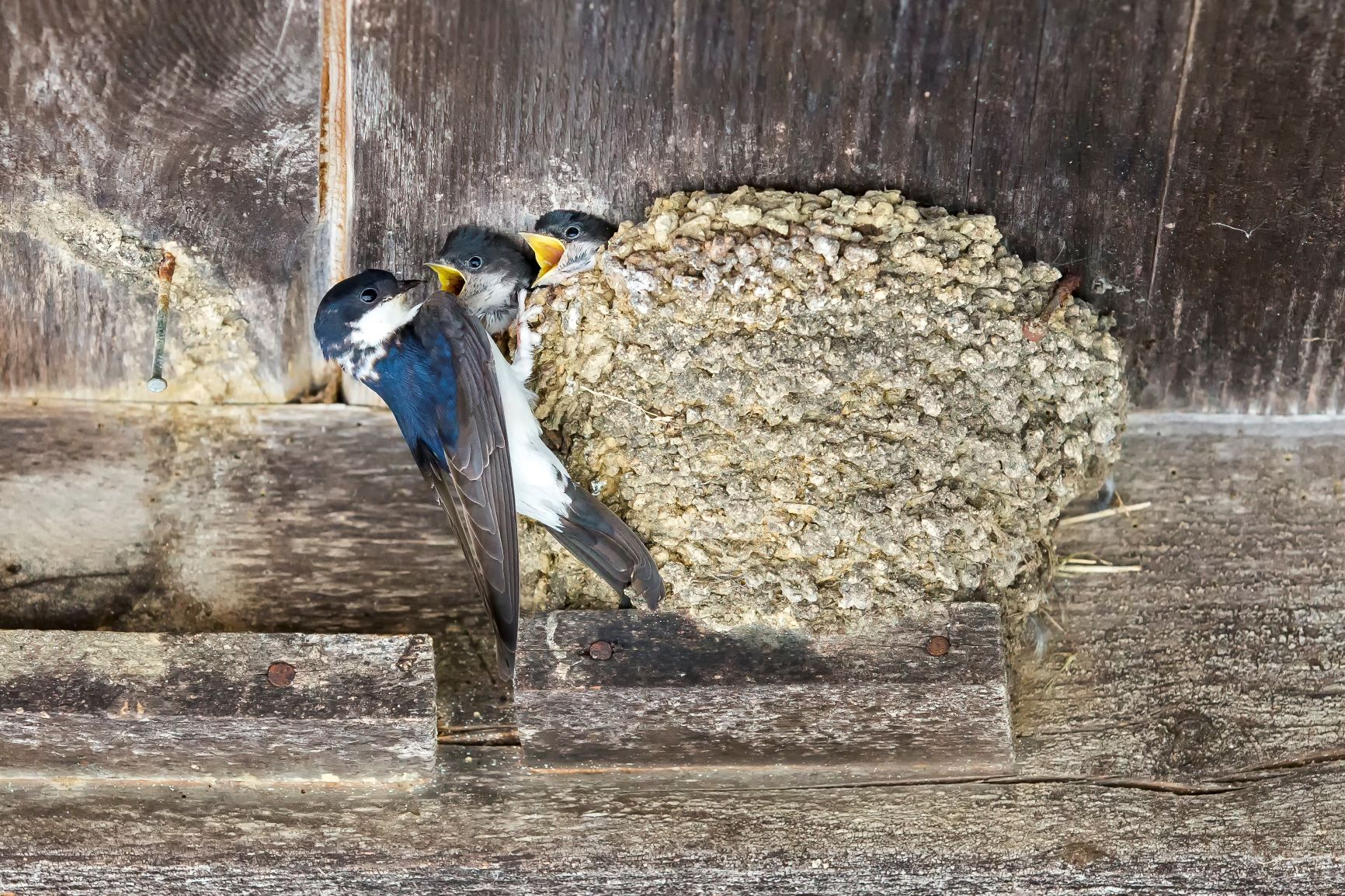
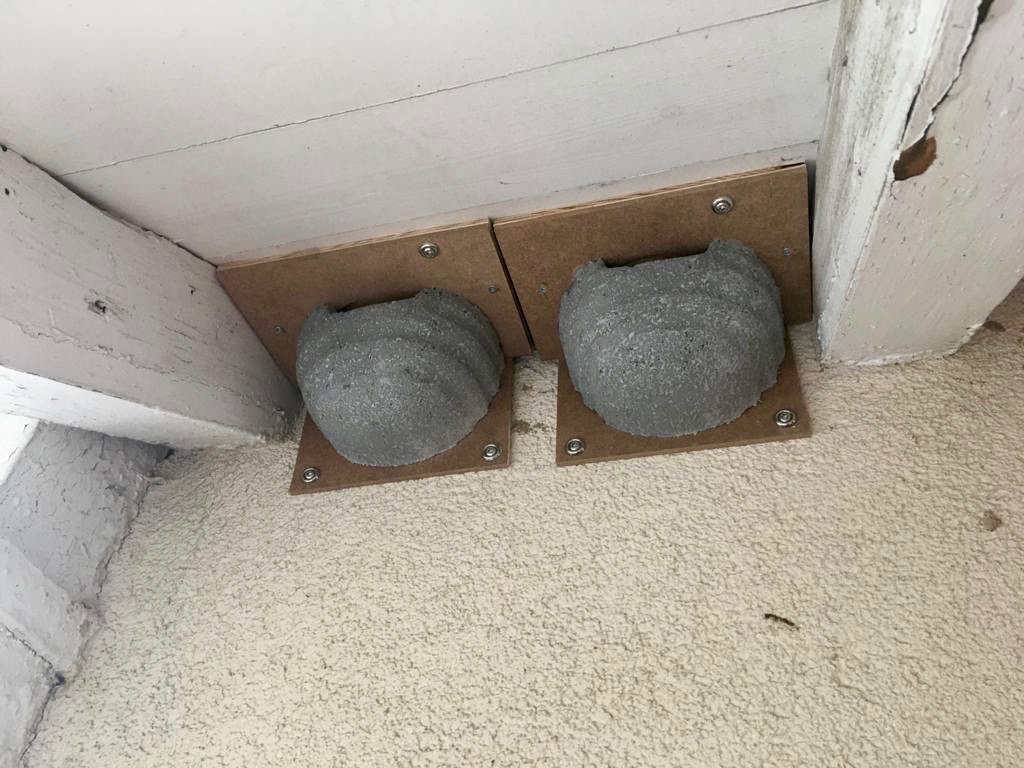
Natural nests of house martins © Lionel Maumary / © Marcel Burkhardt - Artificial nests for house
martins
More information about the species, its call, and its distribution is available here: House Martin
The Barn Swallow
Traditionally a harbinger of spring, it can be identified by:
- its black top with metallic blue highlights
- its reddish-brown forehead and throat
- its forked tail with two tips
It nests between mid-May and mid-September in rural areas, primarily in barns and farms housing large livestock. Their nest, made of mud pellets, is shaped like a small cup attached to the wall. Natural areas rich in wetlands, bare ground, and natural structures are essential for them to find the mud for their nests and an abundance of insects.
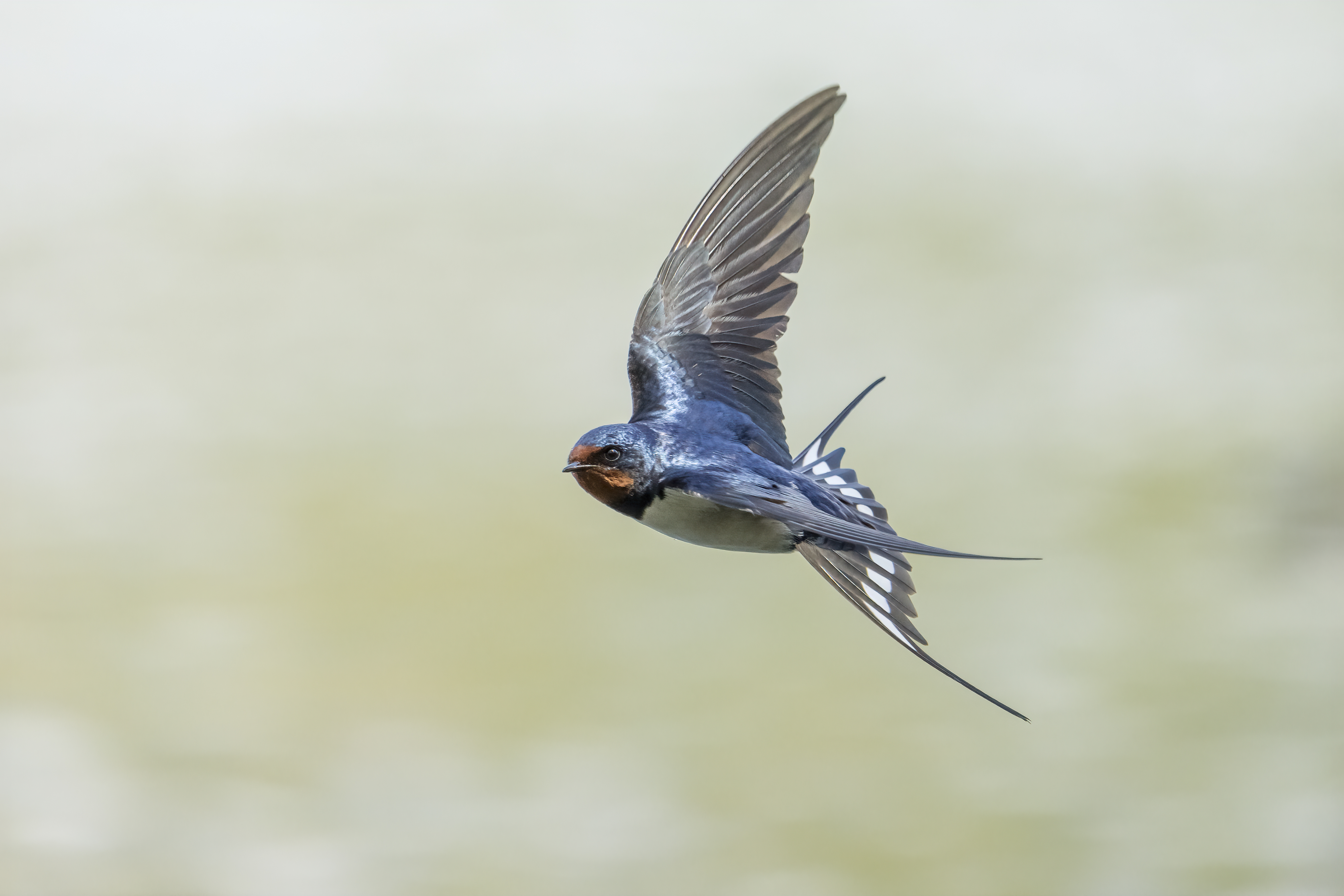
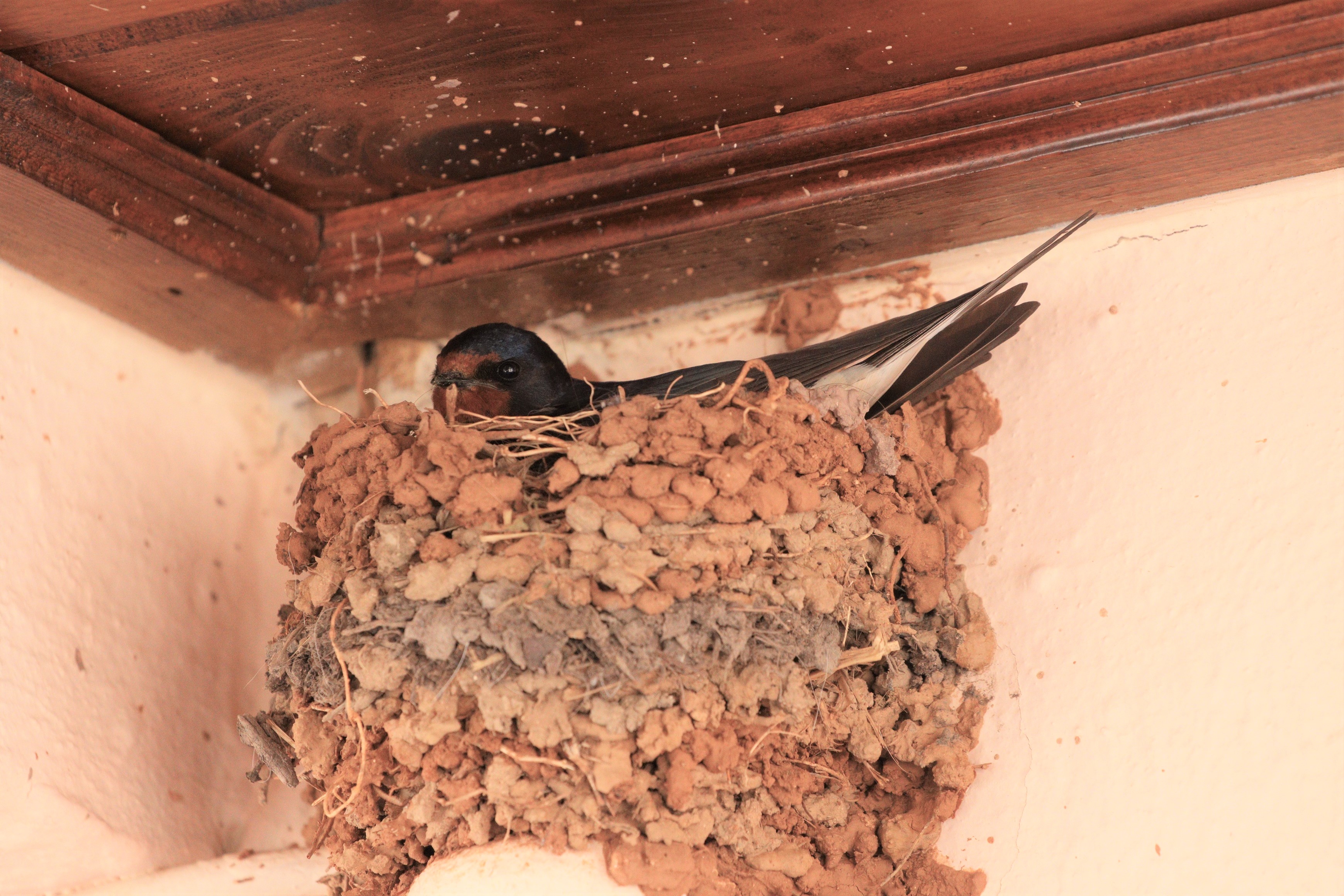
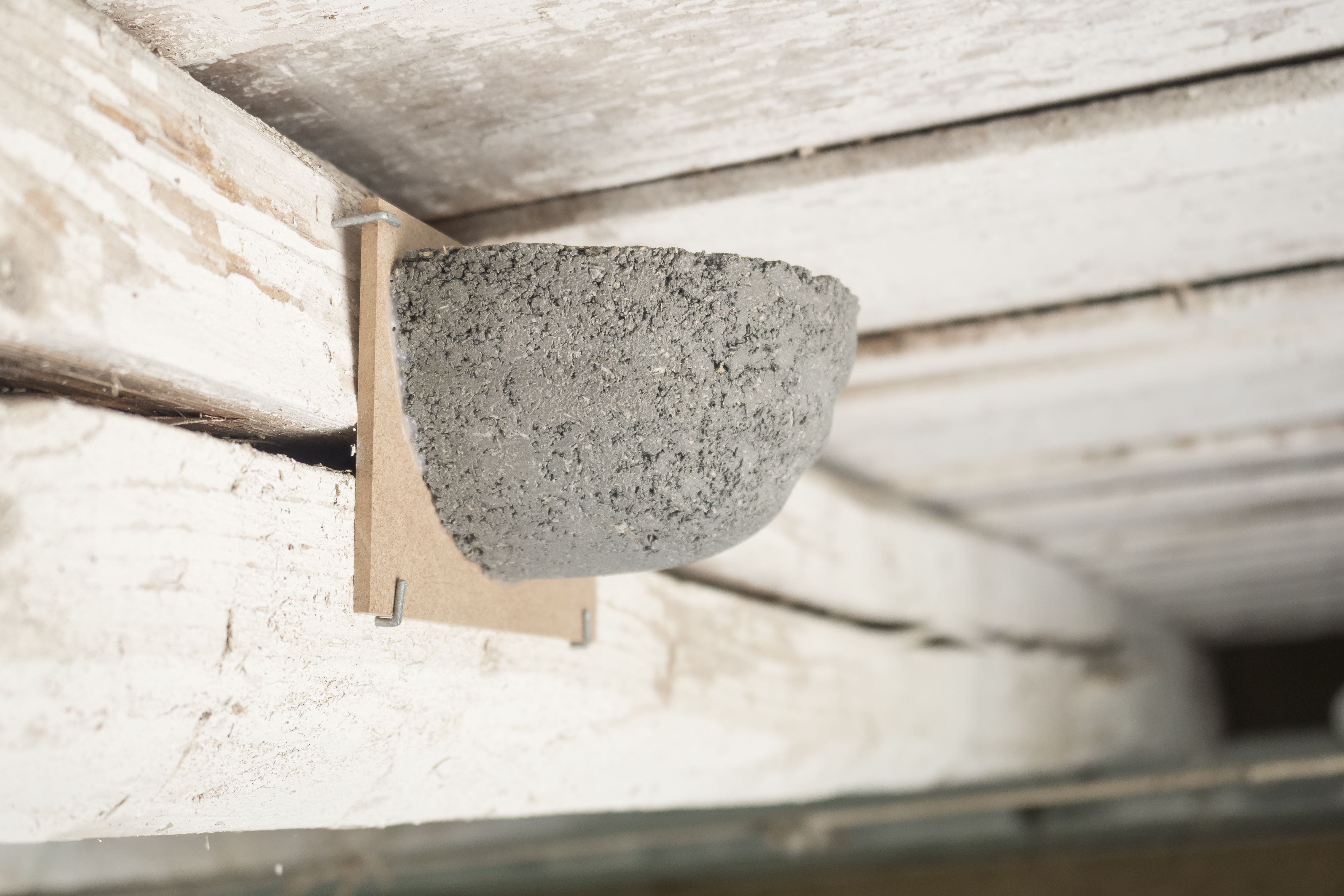
Barn Swallow © Marcel Burkhardt - Natural Barn Swallow nest © Marco Pilati - Artificial nest for Barn Swallows © Archives of the Swiss Ornithological Station
More information about the species, its call, and its distribution is available here: Barn Swallow
Share