





History
A Brief History of the Auberge de Sauvabelin
In 1888, the Lausanne Development Society obtained a concession to create a permanent skating lake and a restaurant pavilion in Sauvabelin. Built in 1891, the Auberge de Sauvabelin was then a charming two-story wooden structure.
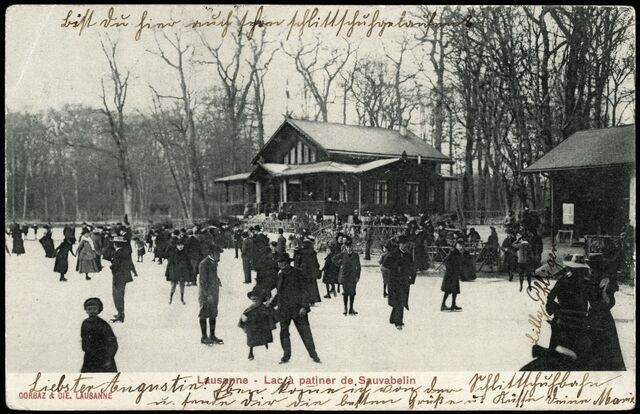
©Anonymous, Skaters on the frozen Lake Sauvabelin, postcard, circa 1900, collection of the Lausanne Historical Museum
The site has become a place for strolls and recreation for Lausanne residents and tourists, who come to the site to go canoeing and skating on this small artificial lake. Access was provided by the funicular, which ran from Place du Vallon, connecting the city to Sauvabelin until the late 1940s.

©Anonymous, Boating on Lake Sauvabelin, postcard, circa 1905, collection of the Lausanne Historical Museum
In the 1950s and 1960s, the Association des Intérêts de Lausanne (ADIL), which was concerned with the future of the site at the time, undertook major interior and exterior renovation and remodeling work, which altered the layout and organization of the Auberge. A “guinguette” atmosphere took hold on the establishment’s terrace, where tables covered with checkered tablecloths invited guests to quench their thirst and enjoy a meal by the water’s edge in the shade of weeping willows.
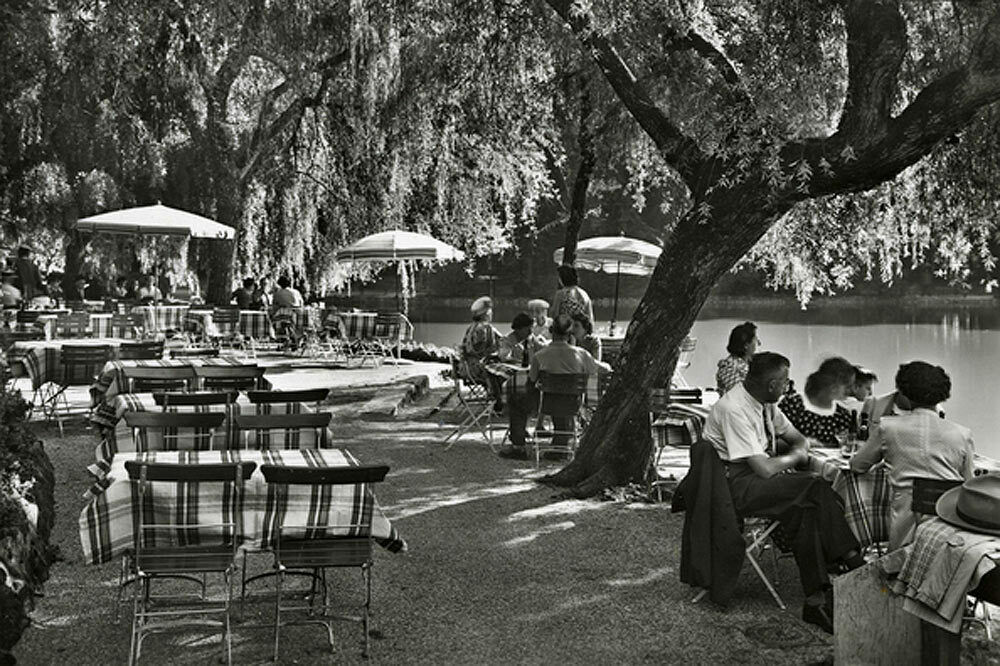
©Anonymous, Café-Restaurant du lac de Sauvabelin, postcard, circa 1955, collection of the Lausanne Historical Museum
The City of Lausanne purchased the Auberge in 1983 and also undertook renovations there. At the same time, since this establishment was popular and recognized as one of Lausanne’s finest restaurants, the City decided in the early 1990s to expand its offerings by converting a small neighboring building that housed public restrooms, changing rooms for ice skating, and a road maintenance facility. Aimed at a more casual crowd, a new establishment was thus created and named the “Pinte à fromages du lac de Sauvabelin.” It found its audience as soon as it opened in 1994.
From 2002 to 2014, a new owner took over both establishments, maintaining the same commitment to quality at the Auberge and a simple, warm, and welcoming atmosphere at La Pinte. In 2014, it was decided—in agreement with the operator, who wished to hand over the establishments—that the Auberge, which required significant renovation and upgrades to meet current standards, would have to be closed before it could reopen. After some refurbishment work and a call for bids, La Pinte found a new operator starting in April 2015, ensuring that a year-round establishment would remain open at the Sauvabelin site.
Reflections and First Public Consultation in 2017
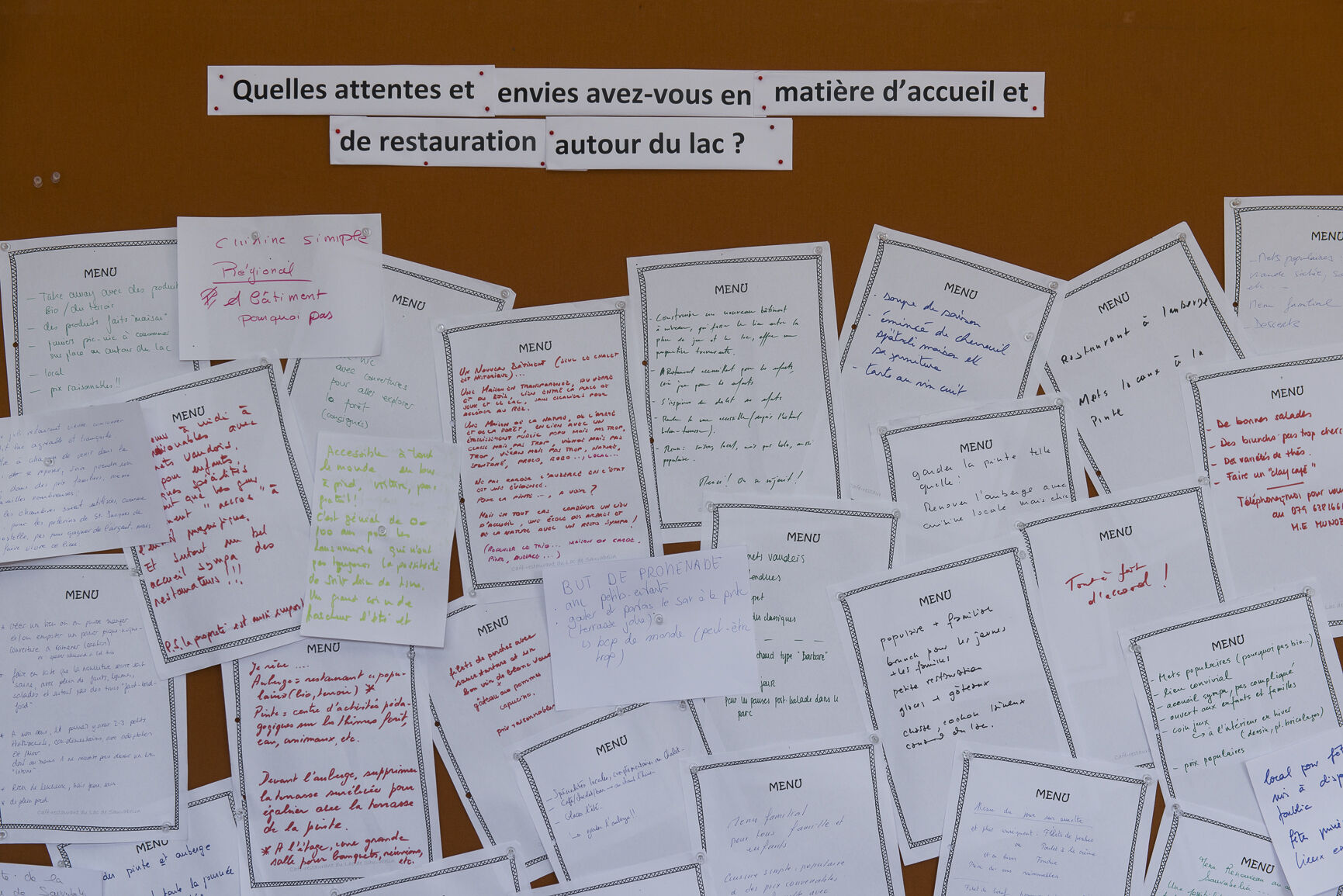
After considering the future of its Auberge and analyzing several scenarios, the City of Lausanne organized a public consultation in November 2017. An online survey and workshops held at the Auberge invited the public to participate in discussions about the future of the public facilities in Sauvabelin. Nearly 500 people shared their memories of the site’s facilities, listed past and current uses, and expressed their ideas, wishes, and expectations. The results of this consultation confirm the strong attachment of Lausanne’s residents to this recreational site, which, just a stone’s throw from downtown, serves as a true “green lung” cherished by young and old alike.
The Auberge Demolition Project: A Misguided Idea
Given the dilapidated condition of the Auberge de Sauvabelin and expert opinions recommending its demolition, in September 2020 the City proposed to the City Council that only La Pinte be retained as a public establishment on the Sauvabelin site and that a participatory deconstruction of theAuberge, replacing it with a space that would create a new connection between the recently renovated playground and the “renaturalized” lake.
This project aimed to create a simple and unobtrusive design by proposing the planting of trees, the installation of picnic facilities, the presence of food trucks tailored to identified needs, and the adaptation of services to meet the needs of families and seniors. The deconstruction process was designed to be participatory through workshops and provided an opportunity to salvage materials and permanent fixtures from the Auberge.
Abandonment of the demolition project
Although the Auberge building is not recognized as an architectural heritage site, the people of Lausanne attach sentimental value to it. A petition was filed in July 2019 by the Movement for the Defense of Lausanne (MDL) and heard by the City Council; it led to the abandonment of the demolition project and the implementation of the current renovation plans to revitalize the Auberge de Sauvabelin.
Share