




Place de la Riponne: Topics Raised by Children and Youth

This article compiles the recurring key themes that emerged during the workshops and walking tours with children and youth for the Place de la Riponne area. They are organized by “themes” to provide an overview of how these themes are currently represented in the imagination of the young participants.
Boundaries and Floor Coverings
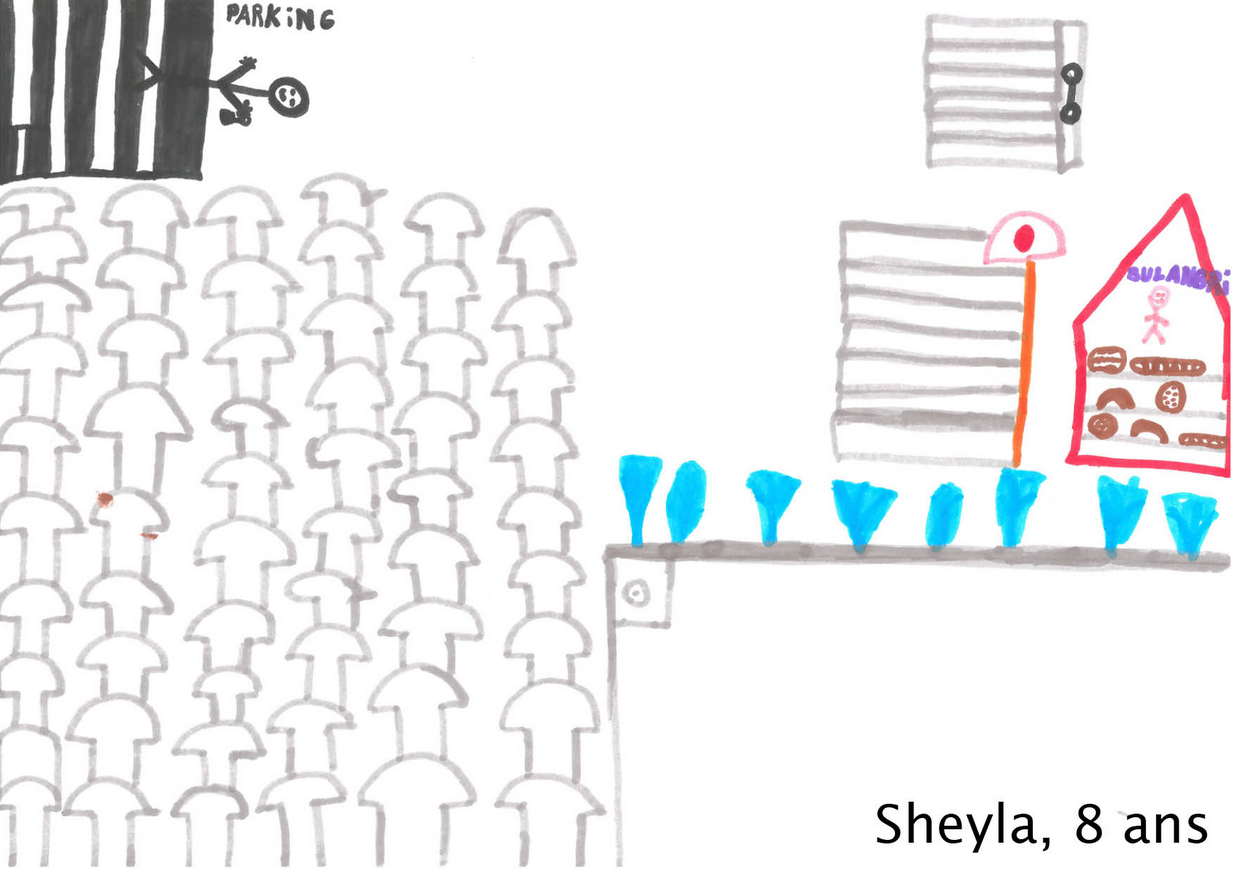
Children often perceive pavement surfaces as spatial boundaries. Despite a certain uniformity in the paving stones, the north side of Place de la Riponne is bordered by the road. La Grenette and the parking lot are therefore not considered part of the square (for more information on La Grenette, see the article “L’entre-deux”). To the south of the square, the type of paving does not always clearly define the square’s boundary, as its use extends beyond it. The presence of the kiosk (which serves as a metro entrance and parking lot access) marks a boundary that separates the area between the Arlaud space, the post office, and the rest of Place de la Riponne.
Empty but spacious: a welcome flexibility
Children recognize Place de la Riponne because “it’s always empty.” This characteristic isn’t necessarily seen as a negative. In fact, the flexibility of the space is experienced on a daily basis by children and young people who come to the market with their families, play soccer on Sundays, participate in events, attend a show during the Festival de la Cité, and so on.
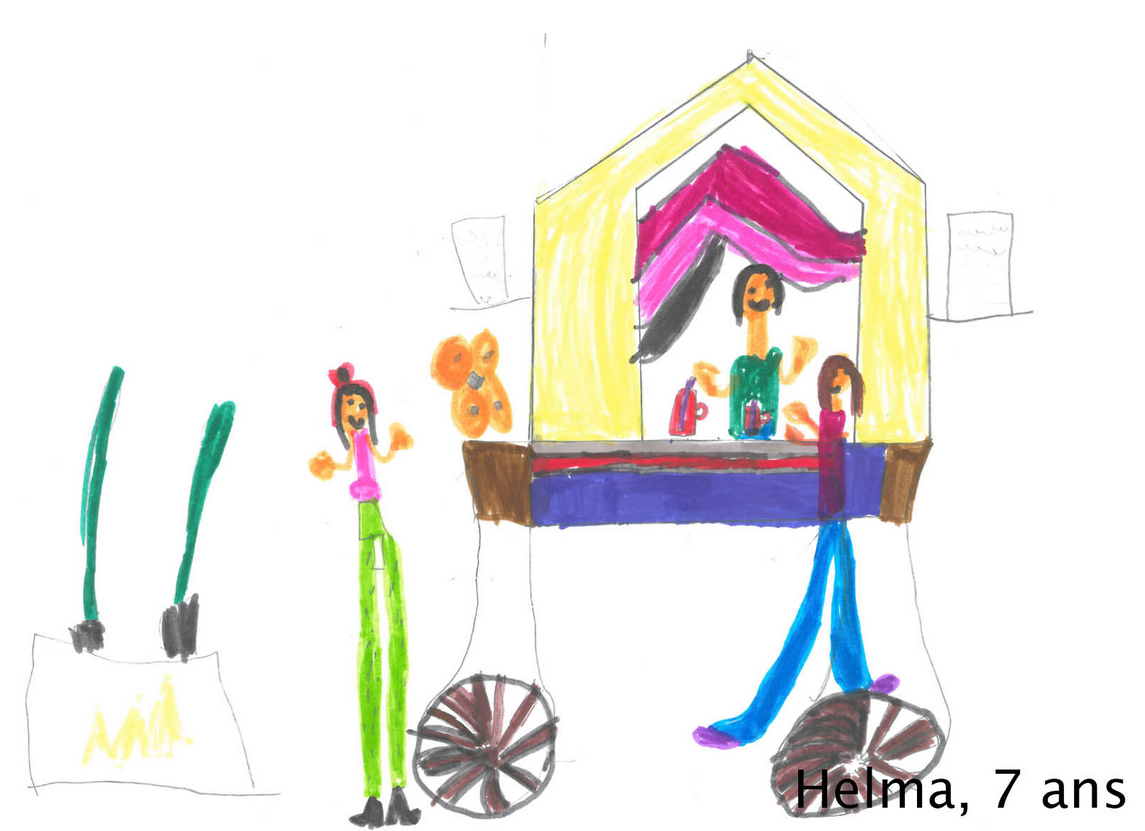
Young people appreciate the food trucks that set up south of the square. They feel that this system of temporary installations helps liven up the square a bit, without limiting its uses thanks to the trucks’ mobility. In their view, flexible and movable street furniture would make Place de la Riponne more lively on a daily basis while still leaving it open for large events.
Coexistence and Juxtaposition
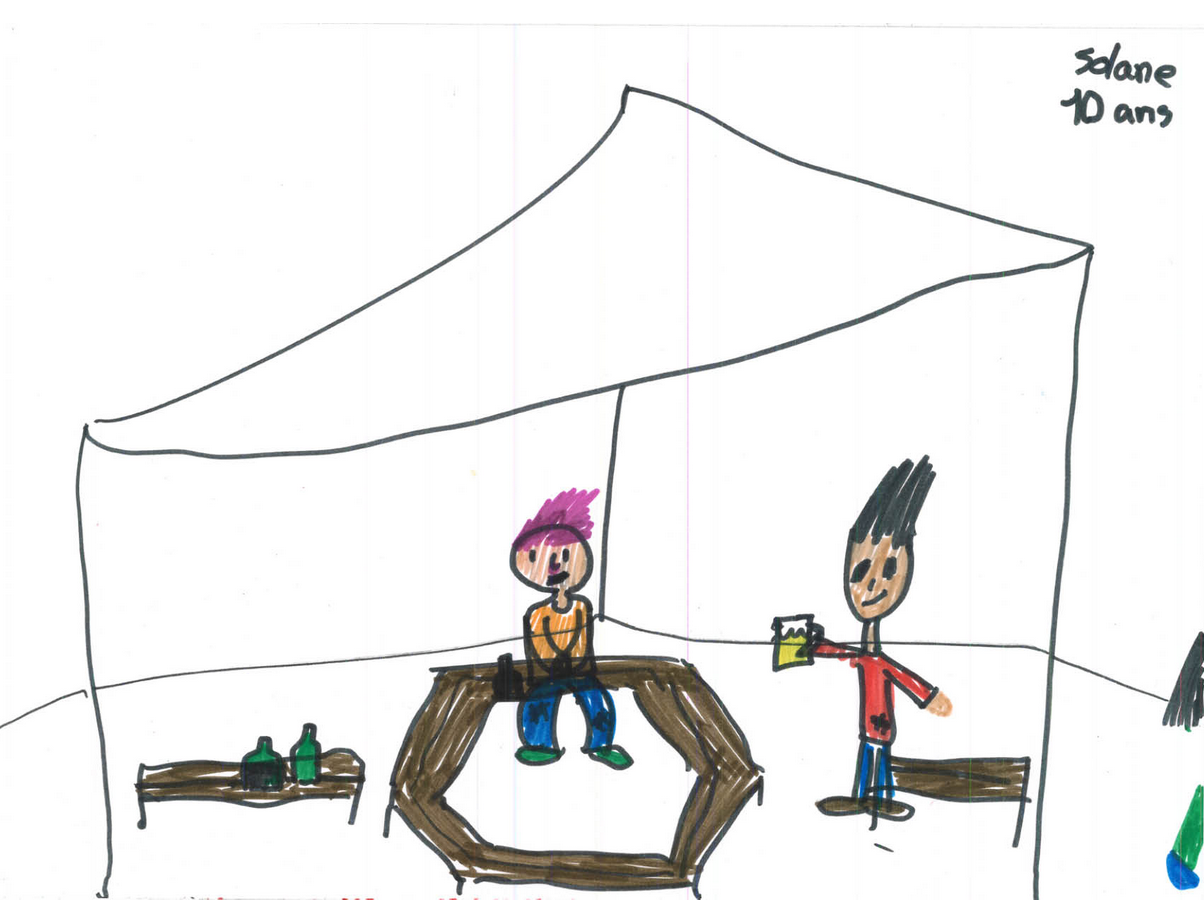
Although the presence of “regulars” at Place de la Riponne is not overlooked, children and young people have a hard time identifying them and feel somewhat uncomfortable talking about them. Yet this group of people does not seem to bother them. While they avoid interacting with them on a daily basis, the principle of sharing the space strikes them as a coherent and desirable goal. It seems obvious to them that Place de la Riponne should be a public space for everyone and that everyone should be able to find their place there.
Moreover, the square’s large size stands out as a remarkable asset that allows for harmonious coexistence between different activities and users: people can mingle without getting in each other’s way.
Certain synergies in usage can also be sought: a playground—even without structures specifically designed for that purpose—adjacent to a café terrace, a bench, or a kiosk is more appreciated by children, who understand the value that the adults accompanying them will also find there. In this sense, the red kiosk at the foot of the Madeleine stairs is particularly important and seems to hold a special status. Its presence transforms the stairs into seating and the fountain into a play area.
Fountain
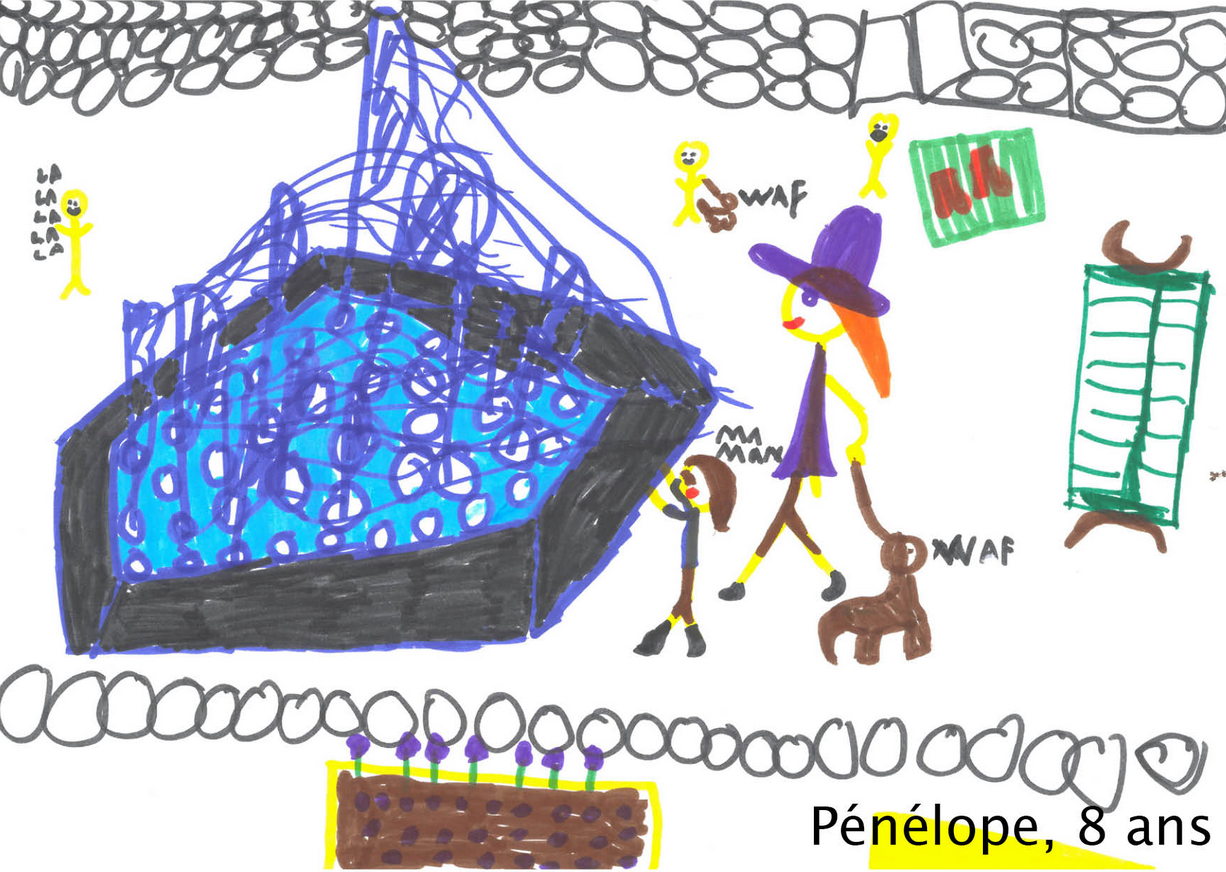
The fountain is mentioned as one of the landmarks symbolizing Place de Riponne. The presence of water is valued for various reasons: aesthetic, environmental (cooling in the summer), or recreational. However, the fact that it is not often in operation was frequently brought up in discussions. When it is not running, all that remains is a large block of black granite that, on one hand, can serve as a seat but, on the other, creates a wall at eye level for the youngest children. This granite base appears in all the drawings of the fountain; it forms a wall that must be climbed if one wants to play with the water.
The Metro: A Landmark
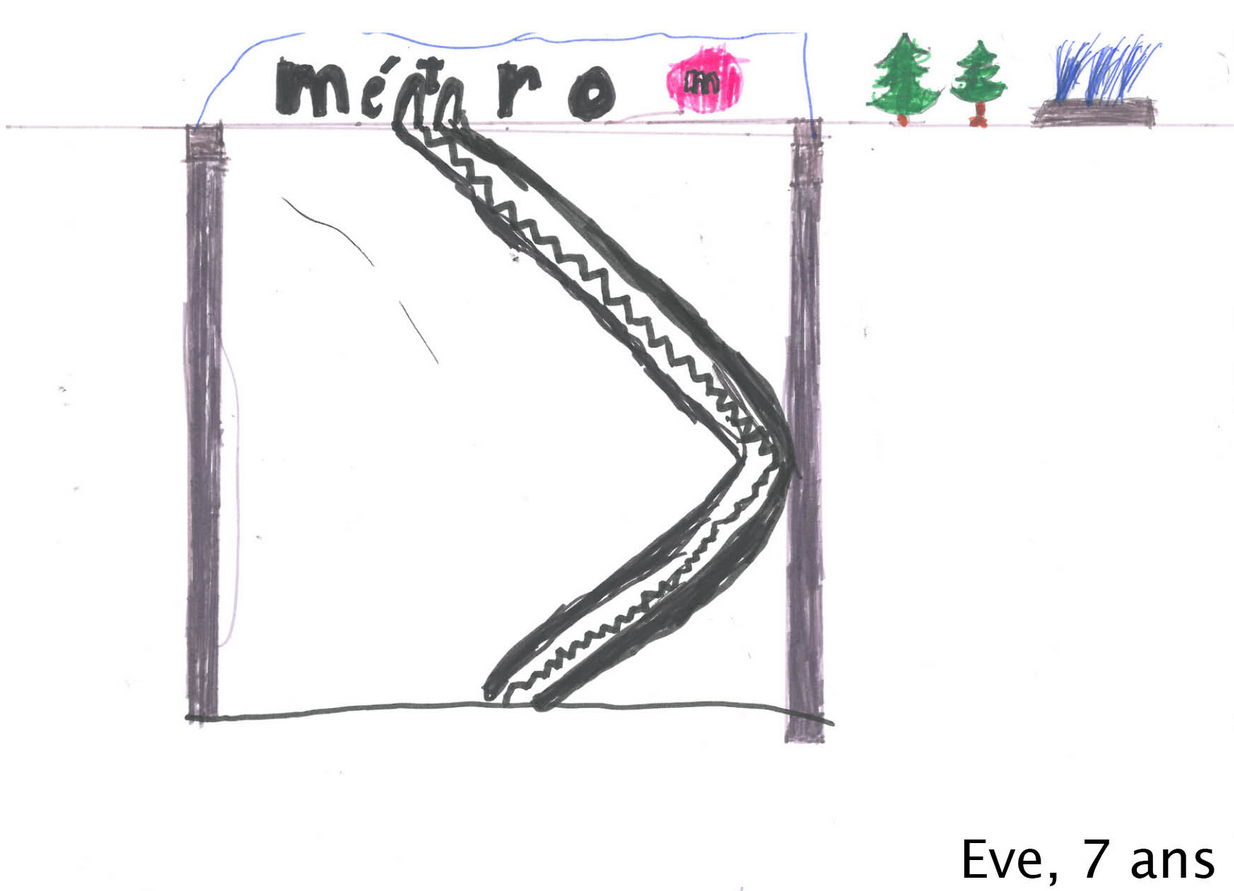
The presence of the metro creates a flow of young people crossing Place de la Riponne.
For younger residents, who do not use the metro much as a means of daily transportation, the Riponne stop is viewed more as a departure point to the rest of the city than as an opportunity for Lausanne residents to access activities in the city center. In general, the activities taking place underground are rarely discussed and have an air of mystery about them.
In addition, the M2’s striking signage marks Place de la Riponne. It serves as a landmark for younger children and is a popular meeting spot for teenagers.
Palais de Rumine / Palais de la Riponne
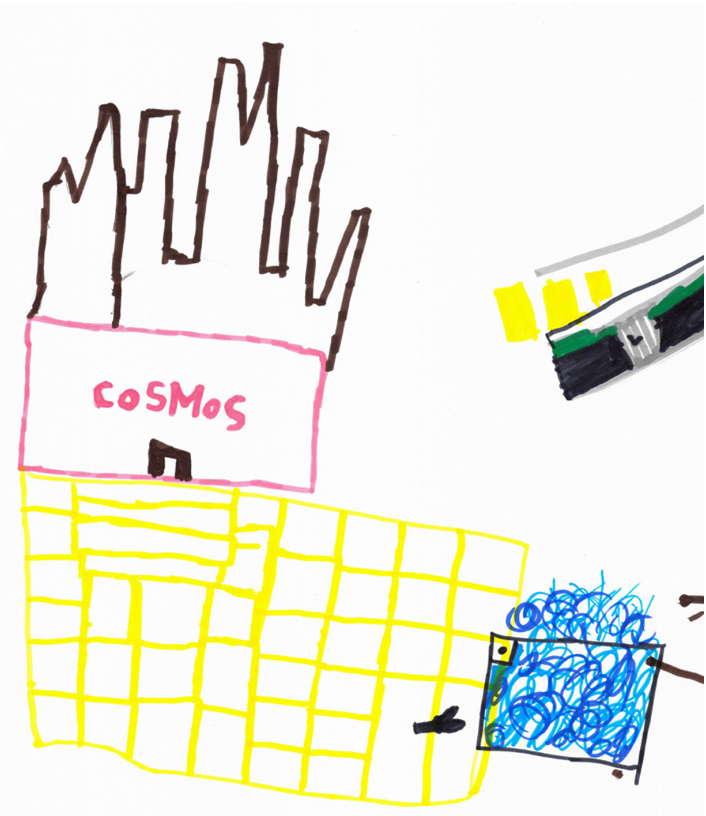
Due to its shape and large size, the Palais de Rumine is easily recognizable. This iconic building, whose footprint is larger than that of the cathedral, is both impressive and captivating. For children, it clearly symbolizes Place de la Riponne, and is sometimes even referred to by that name. In fact, “Rumine Palace” is rarely used by young children to refer to “that big building.” They prefer to call it the Riponne Palace, the Riponne Museum, or by the names of the museums located inside (Museum of Fine Arts, Museum of Zoology, etc.).
The outdoor stairs are part of the square, serving as an extension of the public space. Whether used as a playground, a place to sit for a snack, a meeting spot, or a podium for public speaking, they are a true “feature” of the Riponne public space.
The staircases extend indoors and are used by young people in the same way—or even more so—because they are heated and, unlike places where people gather to consume, they are free and offer Wi-Fi access. Thus, the public spaces of the Palais de Rumine and the library have become true hubs of social interaction where young people gather. This indoor public passageway is also familiar to children, who use it to reach the square from the Sentier des Colombes. They particularly enjoy spending time in the warmth, surrounded by the stuffed animals and stucco motifs.
At times an extension of the public space and at other times a privileged vantage point overlooking the square, the Palais de Rumine blends into the Place de la Riponne, even though it is largely isolated from it by its base. It allows visitors to explore the natural topography of the hill all the way to the Cité.
Passerelle, a high-risk challenge
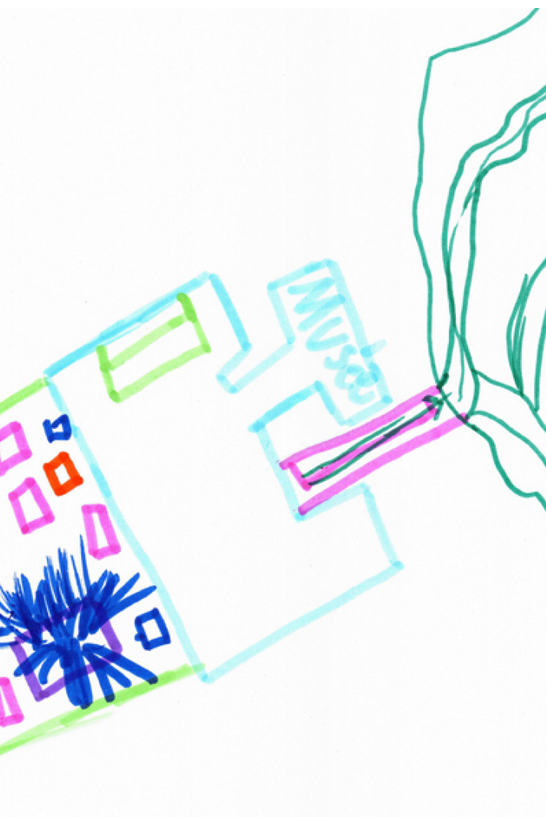
The rear entrance to the Palais de Rumine, via the footbridge connecting the upper floor of the building to the Cité hill, is a path frequently used by many children and young people. Children see it as a risky route because it is slippery and noisy, but it can also be viewed as a challenge to overcome—and thus a source of personal satisfaction once they’ve made it across. Above all, this footbridge is appealing because it allows those who manage to cross it to enter through a small back door, which children imagine to be a secret door. In this way, they create an alternative route that follows the Sentier des Colombes, crosses through “nature” (a grassy hillside), and reaches Place de la Riponne by crossing the footbridge and passing through the Palais.
The young adults who use this footbridge are mainly high school students from the Cité neighborhood. This route is very convenient for those coming from western Lausanne or using the metro. Access “into the city” is typically from the other side of the Cité hill, toward the Bessières Bridge and Rue Centrale. They also appreciate this route for its bucolic and natural features, remnants of a steep hillside.
Details and symbols: tools of the imagination
The Palace’s interior architectural design is appreciated by children, who notice numerous details in the moldings and mosaics, and by young people, who appreciate the Palace’s architectural quality and see it as a symbol of the building’s value.
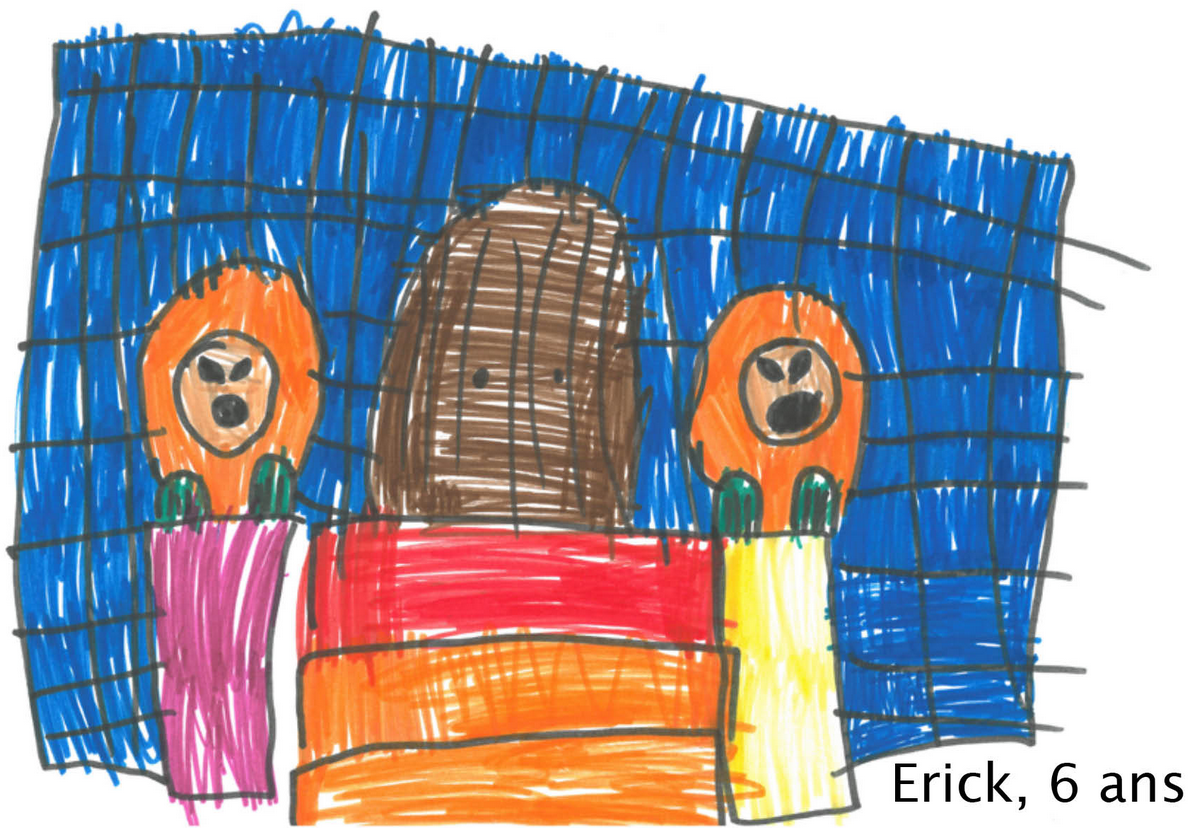
Outside, young people are very familiar with the two “lion” statues (a sphinx and a griffin) that sit atop the columns. These impressive creatures have become the symbol of the Palais de Rumine and, by extension, are an integral part of the image of the Riponne.
On the ground floor, the Palace’s foundations consist of thick walls of cut stone. These are real walls—on a scale that children can relate to! Once again, these walls impress and fascinate them. With their vivid imaginations, they see the doors there as secret passages.
In the square, the pliers embedded in the cement of the cobblestones are also a source of stories—and this time, just as much for children as for teenagers. Many legends circulate to explain its presence, and they don’t hesitate to come up with their own explanations.
Generally speaking, and across the entire area, architectural irregularities are appreciated by children and young people. They allow the youngest children to create their own imaginary worlds within these spaces and, in doing so, to feel a sense of ownership over and appreciation for the spaces they use every day.
The Issue of Ground Floors
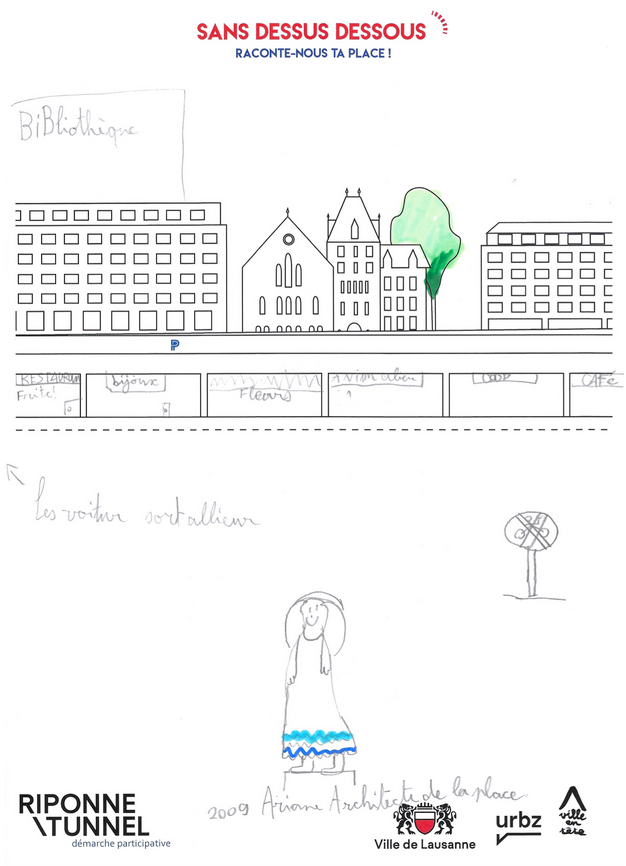
The presence of the underground parking garage does not seem to bother the younger crowd—quite the contrary—because it means there are no cars on the square, leaving more space dedicated to pedestrians (unlike Place du Tunnel). Nevertheless, older residents clearly recognize the challenges of bringing life to the square if the ground floors are occupied by parking spaces. Cars aren’t the only problem with the ground floors on Place de la Riponne. This issue is raised even though, on the other side, the base of the Palais de Rumine isn’t being put to use.
With a touch of irony, young people note that while there are many shops around the Place du Tunnel that bring life to the square’s perimeter, they have virtually no outdoor space to gather, which diminishes the potential for the public space to come alive.
Share