




The In-Between: Topics Raised by Children and Youth

This article compiles the recurring key themes that emerged during the workshops and walking tours with children and youth for the Place du Tunnel area. They are organized by “themes” to provide an overview of how these themes are currently perceived by the young participants.
In the heart of the block
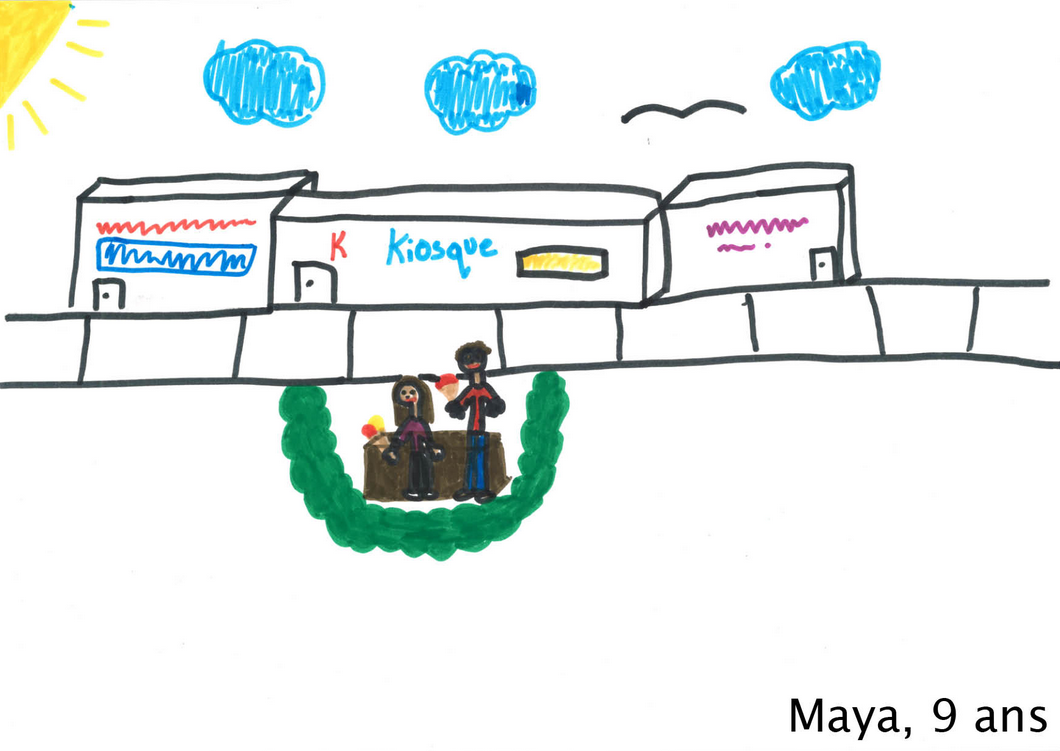
Between Place de la Riponne and Place du Tunnel lies a very unique block center. For some, it’s a space they visit daily; for others, it’s completely unknown or even a hidden gem. In any case, the courtyard on Rue des Deux-Marchés is a space in its own right, perceived as part of the northern neighborhoods (Tunnel, Borde, etc.) rather than Place de la Riponne. The scale of the area and the low volume of car traffic make it a place that stands in contrast to its surroundings and is more likely to be embraced by passersby.
Another striking feature of the block’s center is the contrast between its various elements. On one side is a row of ground floors bustling with shops, set within a medium-sized historic built environment characterized by color and numerous details on the facades. On the other hand, there is a large, uniform, gray building that houses an indoor parking garage on the floors most accessible to pedestrians. This stark contrast between the two buildings is noticed by young people and children alike, and raises many questions.
This inner courtyard also stands out from the surrounding areas due to the vegetation in its center. Despite this small green oasis, children and young people point out that there isn’t really a way to make use of this green space and that it isn’t welcoming.
Parking Lots, Again and Again
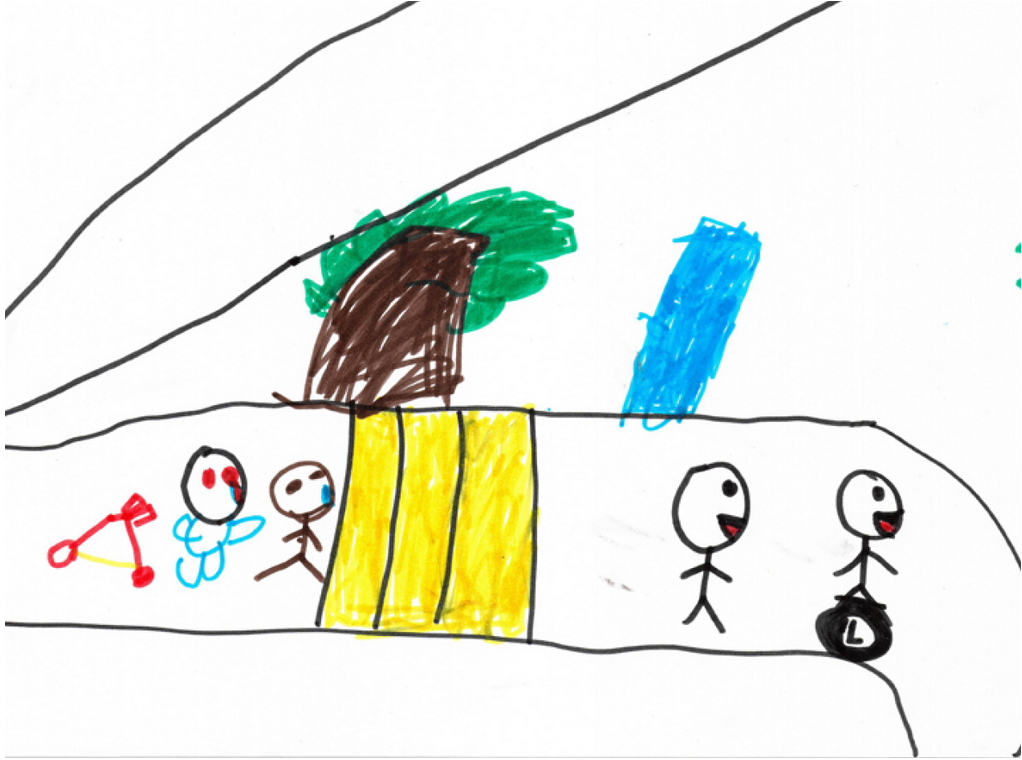
Just like roadways, parking lots play a major role in the Riponne-Tunnel area, whether they are at ground level, underground, or on upper floors of buildings. Despite their static and temporary nature, children do not view these areas as public spaces they can make their own, and very few see any potential in them.
Young people’s views on parking and car use in the city are divided. Some consider the ability to access the city center by car to be necessary and useful, while others would like to see these spaces transformed to make more room for pedestrians.
More colors for a more vibrant city
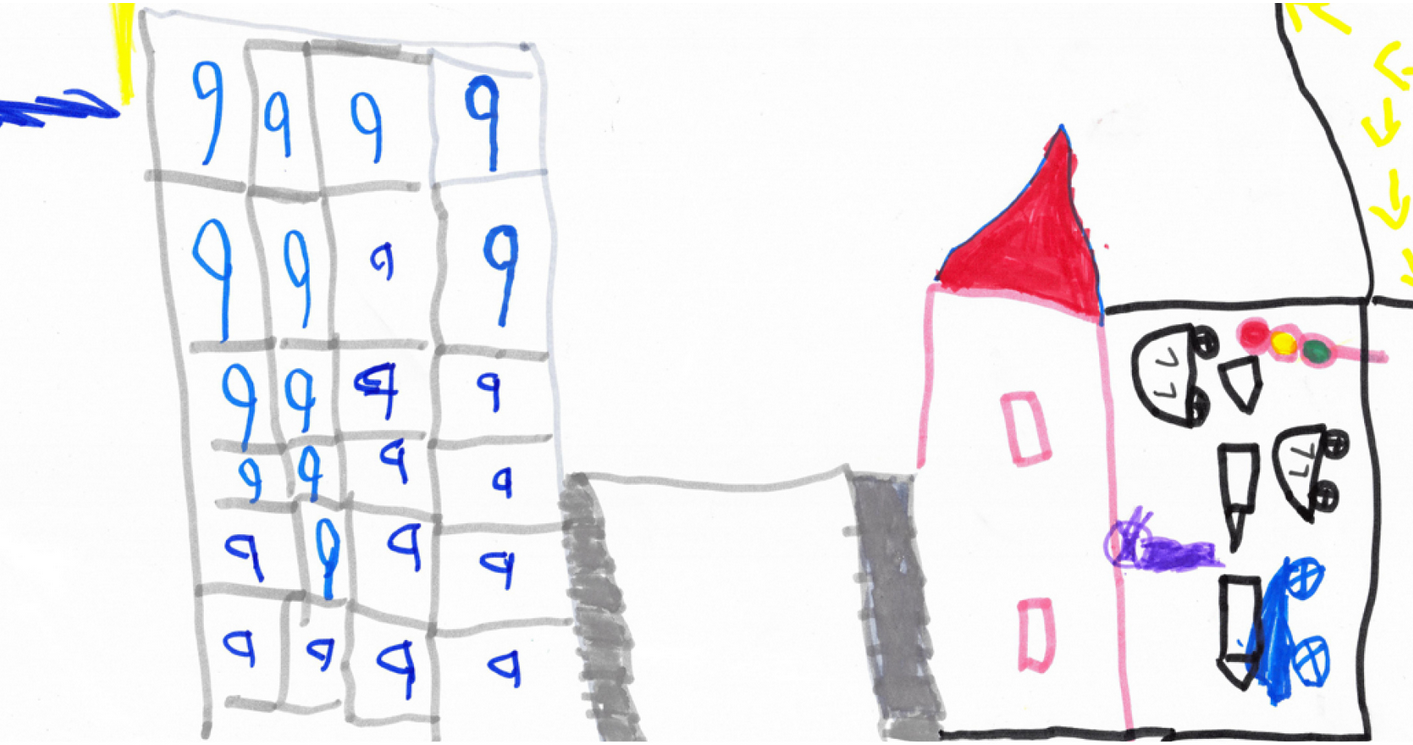
Young people and children are sensitive to the appearance of the city around them, particularly its use of color. In general, this demographic feels there is a lack of color in the area. Colorful elements are perceived as being linked to the activities and possible uses of public and private spaces; they are attractive, unlike gray, which has a road-related connotation and is synonymous with danger and prohibition.
For young children, the ground surface is very important, and many point out the monotony and uniformity of the “flat gray” surfaces of roads, parking lots, and public squares. In addition to being monotonous, the color gray is also associated with traffic signage and is therefore inaccessible to them.
In terms of colors, teenagers’ attention is particularly drawn to vertical elements such as building facades. In fact, they appreciate the colorful facades of the historic buildings lining Place du Tunnel and Rue des Deux-Marchés, as well as the ceiling of the underpass at Riponne 10, near La Grenette. For them, these are elements that brighten up the city and bring it to life. They clearly perceive them as a positive aspect of the urban landscape. In their view, the quality of colors in the city can take many forms: for example, they envision murals—such as the one near La Grenette—on the large, blank facades of the tunnel, or dynamic, colorful lighting on the facades of iconic buildings.
La Grenette: A Space for Convergence
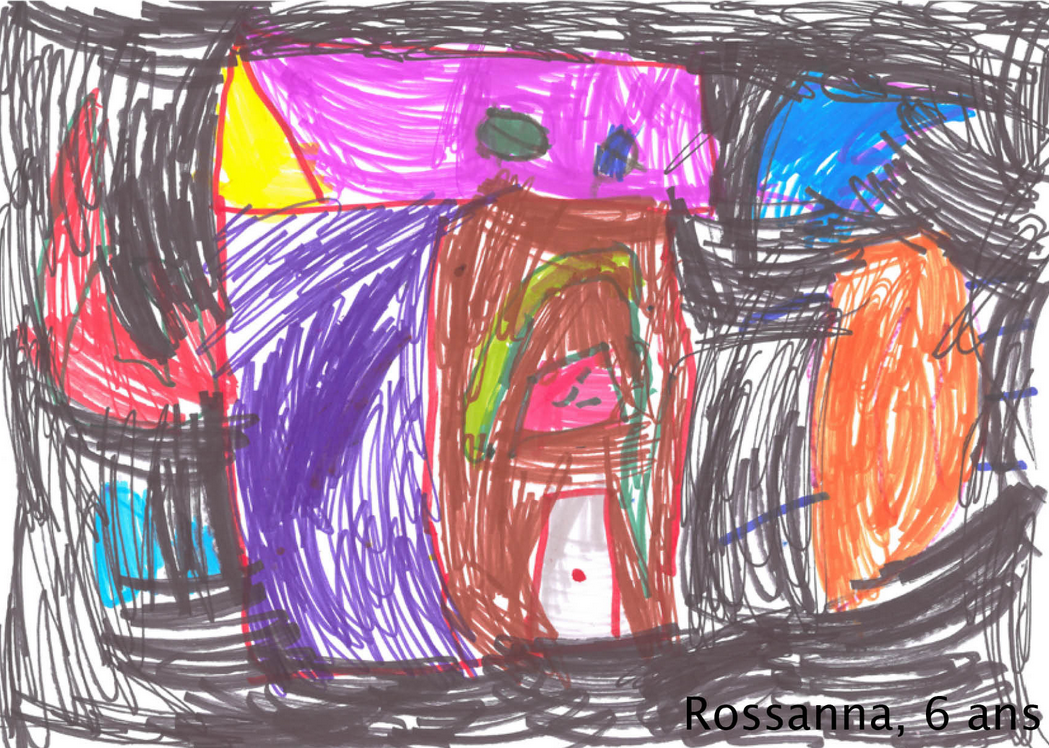
The base of the cantonal administrative building is separated from the rest of Place de la Riponne by the access road to the parking lot, making La Grenette a distinct space in the eyes of young children. The area is well known to young children but virtually unknown to teenagers. This is due to the presence of the Grenette Playground, which is frequented and greatly appreciated by many children. The proximity of the Grenette bar creates synergies in usage that are highly valued because of their juxtaposition: it’s a place where everyone can come together—parents and children meet their respective friends there—and mingle with other patrons from diverse backgrounds.
Although young people find the layout of the Grenette bar very welcoming, the traffic lanes marked on the ground at the Halte Jeux very fun, and the management of the space very “open,” they know very little about this place. This is partly due to the fact that young people’s purchasing power is relatively low and that, in their eyes, places where people spend money are not spaces they can easily make their own.
Microcosms: A Matter of Scale for the Appropriation of Public Space
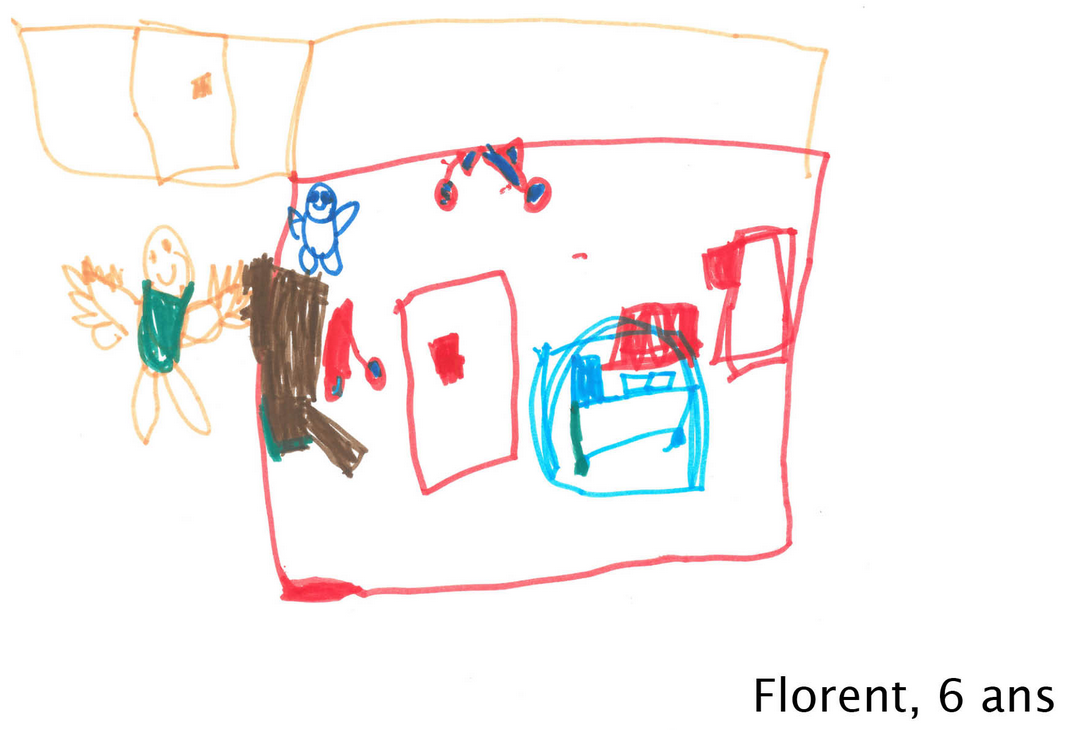
Like oases, microcosms are small spaces within the city. They are compact areas where children feel protected and safe, despite their proximity to roads or other noisy areas. For children, these places serve as landmarks that are part of their everyday mental map of the city. Children’s relationship with the city differs from that of adults simply because they are still young. Their perspective is much lower than that of an adult, and their perception of space is therefore different. Children’s image of the city often seems divided into small pieces, and just because these pieces are small doesn’t mean it’s a bad thing—quite the opposite! This division may reveal a search for refuge or a domestic scale that is distinct from that of the surrounding public spaces.
Discussions and workshops with children revealed that microcosms are not found only in public spaces but can also be found in private spaces such as stores. Indeed, the shops on Rue du Tunnel play this role. Children who live on or frequent the street know the shop owners well (who are sometimes their parents or their parents’ friends). The shops become places for socializing, neighborly interaction, and thus mutual support in caring for children.
Share