




La Place du Tunnel: Topics Raised by Children and Youth

This article compiles the recurring key themes that emerged during workshops and walking tours with children and youth for the Place du Tunnel area. They are organized by “themes” to provide an overview of how these themes are currently represented in the imagination of the young audience.
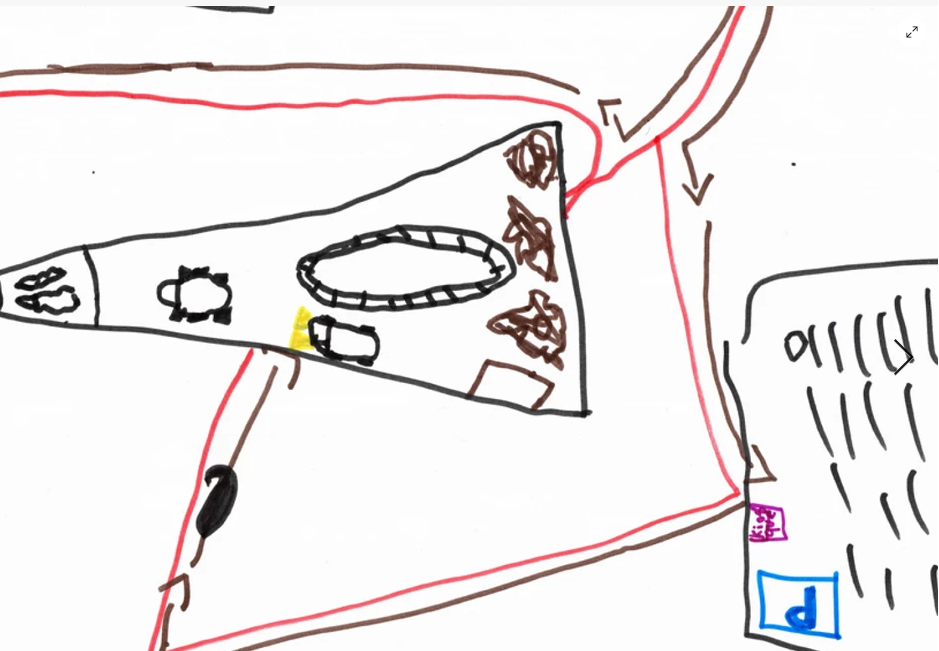
A Triangle, an Island
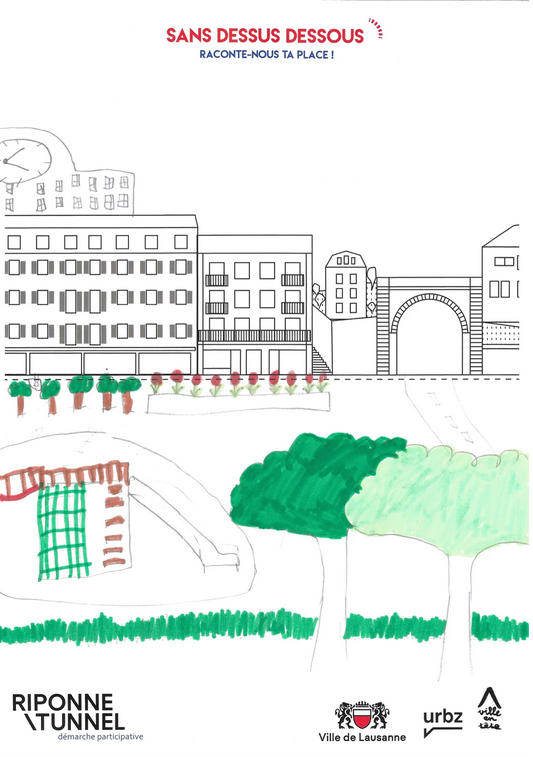
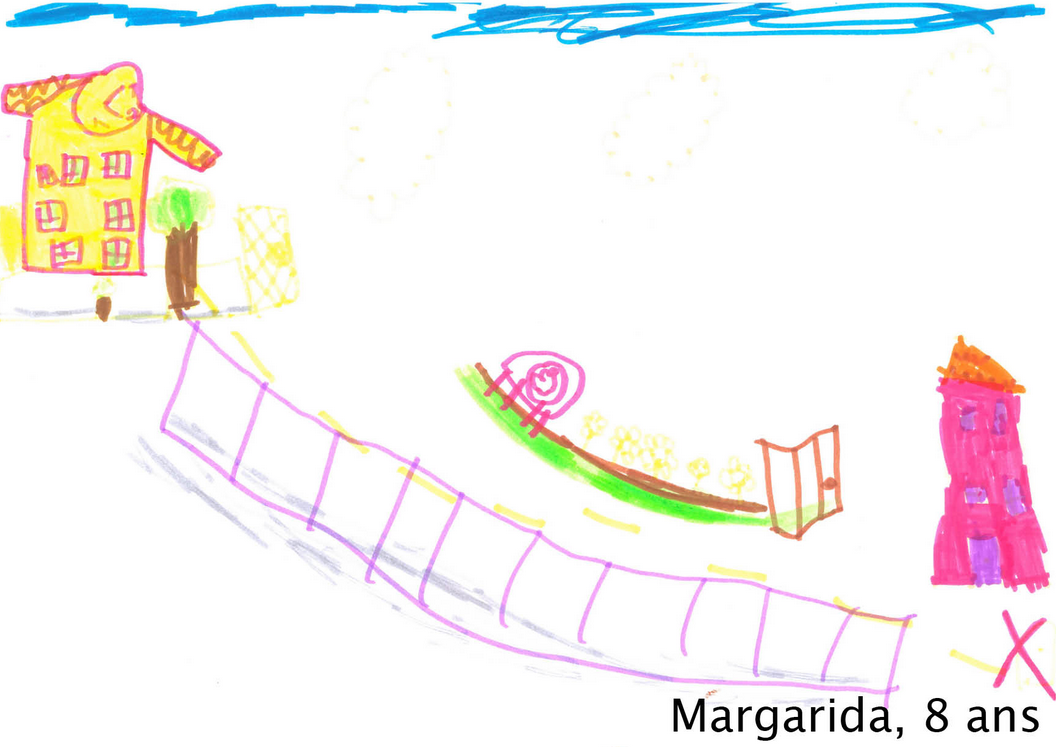
Place du Tunnel is difficult for children and young people to define because its role as a thoroughfare is so pervasive. The size of the roads and their layout form a central triangle that appears in mental maps. This triangle is like an isolated island, lost in the middle of a much larger void bounded by building facades. To access this “island,” there is a single “bridge” located on the south side. This triangle exists independently, detached from the rest of the public space—particularly from the southeastern part of the square, which houses a paid parking lot.
The ground floors of buildings house shops, restaurants, and cafés, yet these businesses are not allowed to extend onto the sidewalks. There is therefore a disconnect between commercial activity and the vibrancy of public spaces. Nevertheless, children and young people greatly value their presence.
Crossings
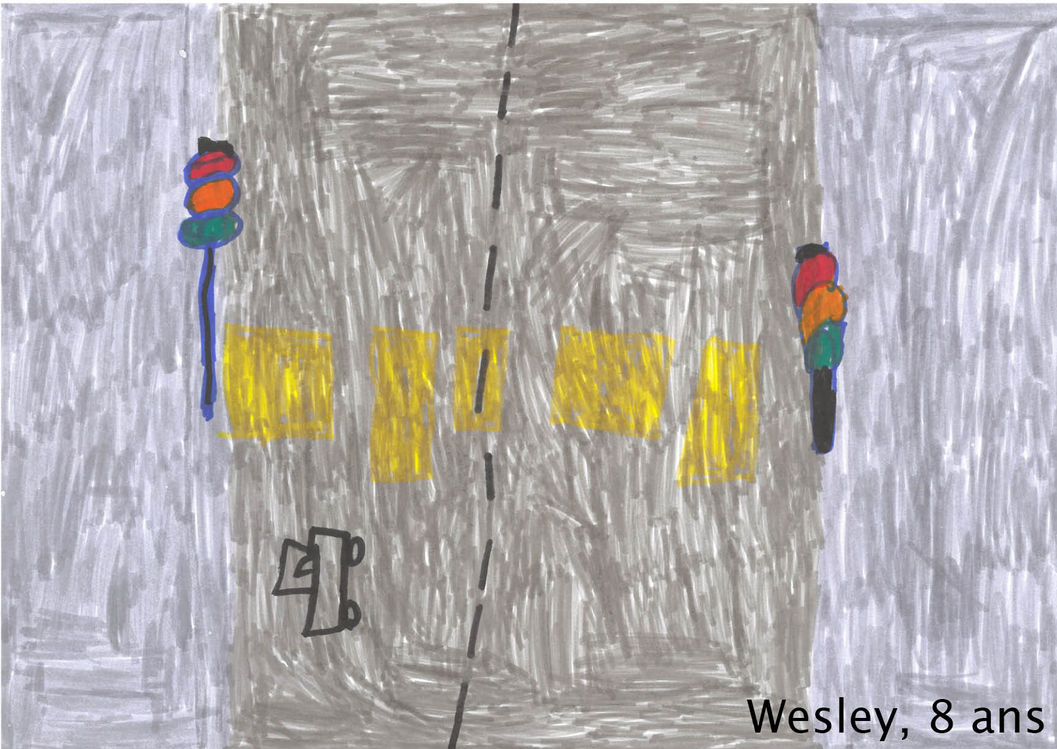
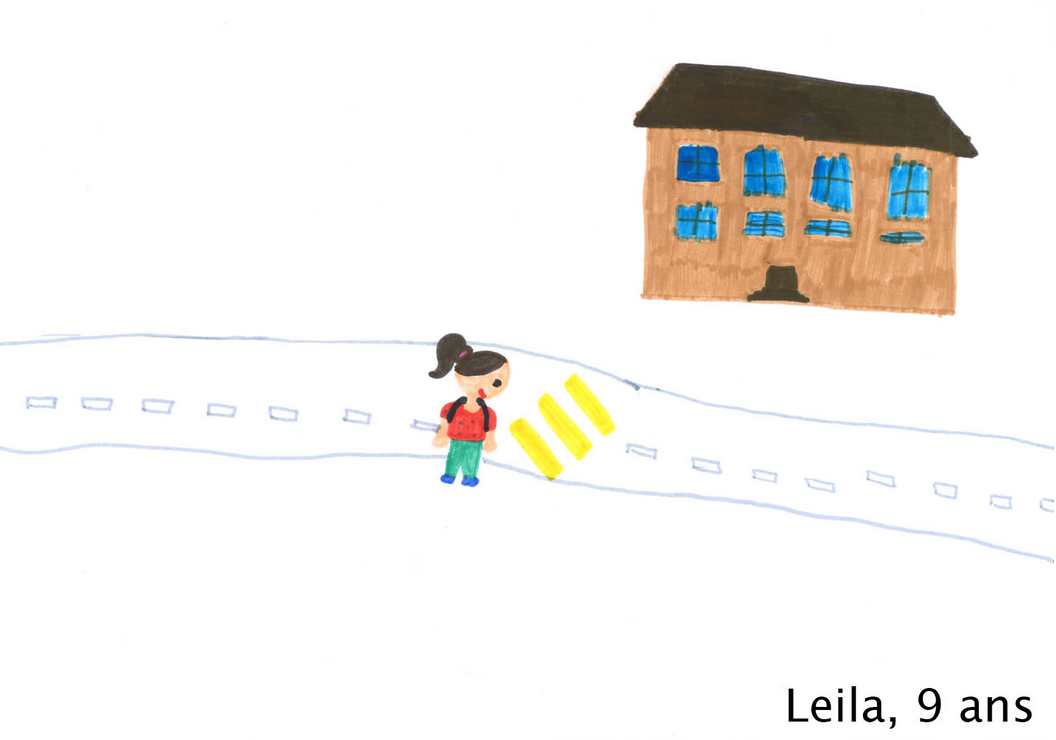
In a car-dominated environment, children and young people struggle to find their place. Place du Tunnel consists of nothing more than a series of crosswalks punctuated by traffic lights and lengthy wait times. These yellow crosswalks and traffic lights break up the gray of the road and clearly mark their path through these spaces.
Despite this traffic hazard, many parents allow their children to cross alone from the end of Rue du Tunnel to the stairs of the Collège de la Barre. Absorbed by safety concerns, their attention is therefore currently firmly focused on this issue.
The successive crossings channel possible routes and force pedestrians to follow a very precise and unnatural path. It is clear to children that these elements are part of traffic infrastructure and are not spaces they can make their own, despite their usefulness for crossing the street.
The newsstand, a landmark
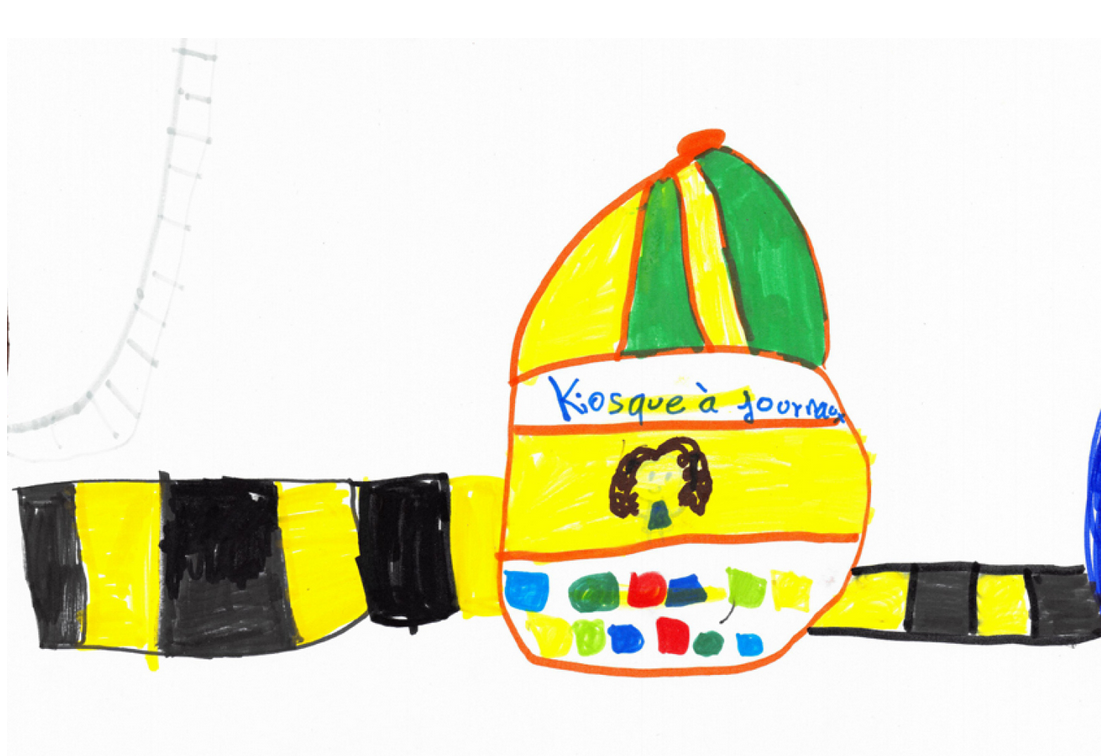
The newsstand on Place du Tunnel marks the paths of the youngest children in a different way. It serves as an intermediate destination that helps break up the journey into segments, allowing children to better make the space their own. The kiosk’s significance may stem from the lack of amenities in the rest of the area, the abandonment of the old tram stop, and the fact that there are few or no other safe places where children can let their attention wander and let their imaginations run free. Nevertheless, when it is open, this kiosk is now seen as a familiar milestone along an obstacle course.
With the relocation of the bus No. 62 terminal to Croisette, this kiosk is now often closed due to a lack of customers. Young people and children are aware of this change and regret it. Indeed, when the kiosk is open, it brings life to the public space and attracts people, whereas when it is closed, it appears neglected and can be intimidating.
A parking lot or nothing at all
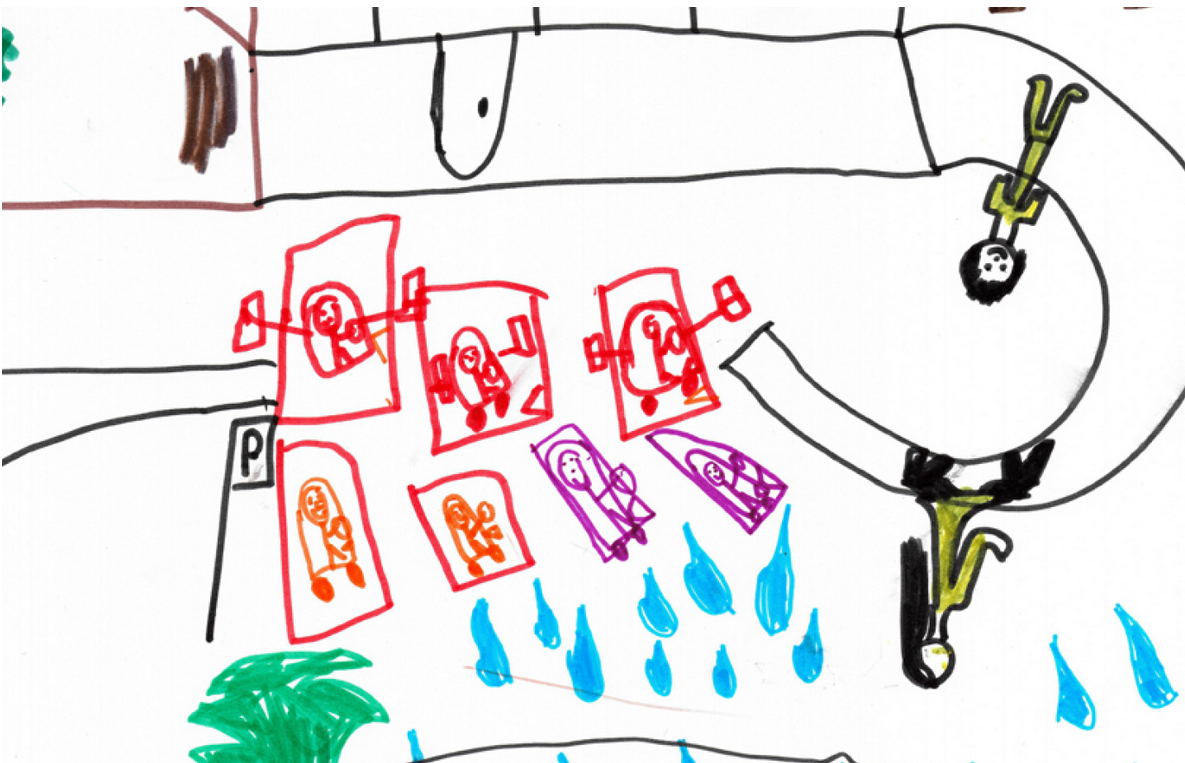
Unlike Place de la Riponne, the parking lot on Place du Tunnel has remained open-air. It encroaches on the entire public space, leaving no other possibilities for its use. This unique feature explains why, when no specific event is taking place there, Place du Tunnel does not exist in children’s imaginations, nor does it exist as a public space that young people can make their own.
The large trees surrounding it, however, are noticed and greatly appreciated by young people.
Alternative Uses During the Summer
The look of Place du Tunnel may change as soon as Tunnel Rêve de Vert takes over the space or when the square hosts events for the Festival de la Cité.
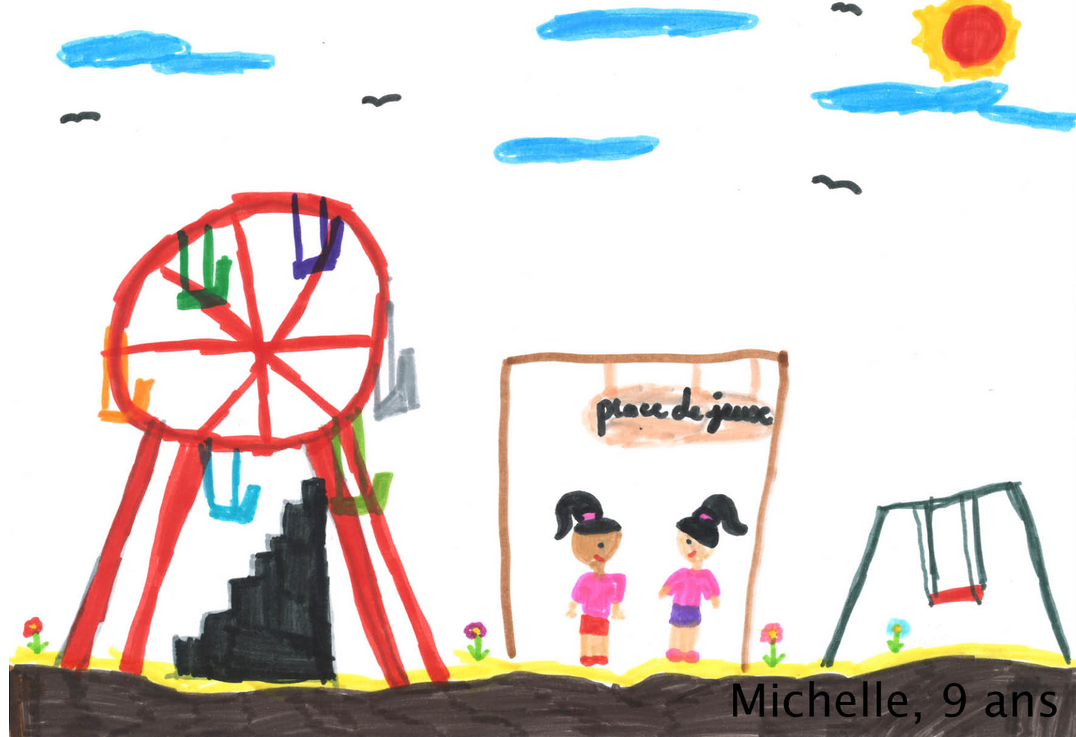
The first has been a recurring fixture in the square from early July through the start of the school year for the past 10 years, transforming it into a neighborhood park. This large adventure playground, developed by the Lausanne Foundation for Sociocultural Activities (FASL) and supported by the City of Lausanne, replaces asphalt with wood chips and the parking lot with a green space for socializing, featuring various workshops, games, and cooking areas.
As part of these events, both children and young people appreciate that Place du Tunnel is becoming more than just a playground—it’s a gathering place for families in the surrounding area as well as for a wider audience from across the city. They are exploring the possibility of making the “Tunnel Rêve de Vert” installations permanent or extending this type of activity beyond the summer months.
Tunnels: A Route People Avoid
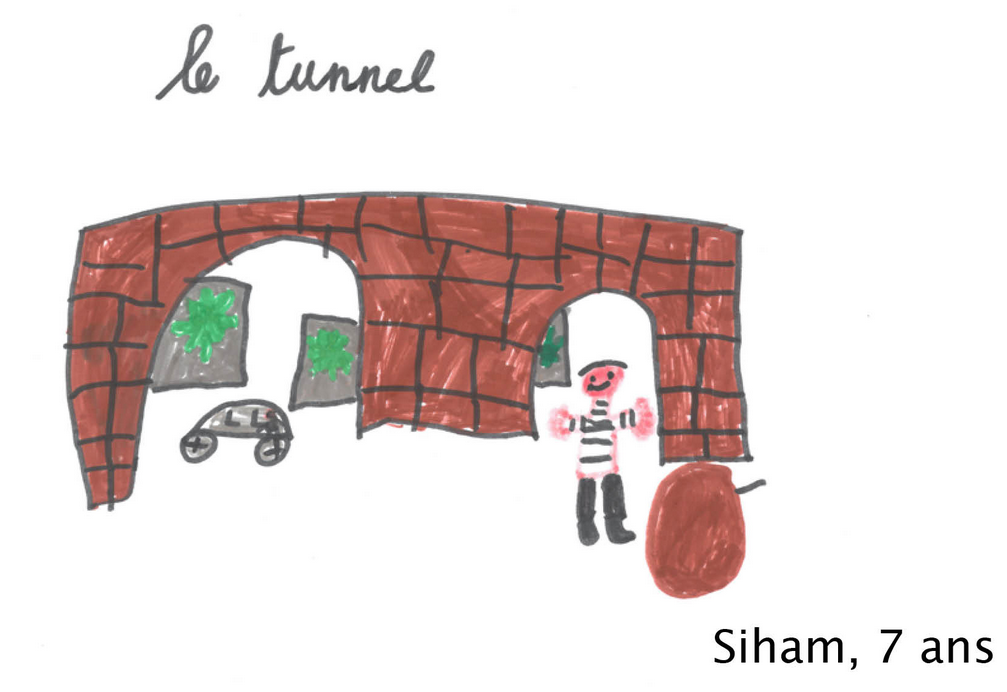
The Tunnel is actually made up of two tunnels: one for cars and another for pedestrians. The young people and children we met do not ride bikes themselves, but the youngest ones ride their parents’ bikes and wonder why so little space is allocated to bikes.
The Tunnel is, of course, the symbol of Place du Tunnel. Its posters and display cases could serve as backdrops for games, but the whole setup fails to appeal to either children or teenagers, who only pass through it because they have to.
Its relatively majestic height is scarcely highlighted or showcased, despite the important urban role it plays. This aspect was noted by the young people in the evening, when only a central hanging streetlight illuminates it, just as it does the rest of the street.
The Collège de La Barre
The Collège de La Barre is located behind the row of buildings that runs along the square, but its presence on the square is evident. First, because of its function—many children attend it daily—and second, because of its bell, which, despite the background noise of traffic, sets the rhythm of the day.
As a daily destination for children, its location shapes many of the traffic flows in and around the square (crossings from the south, the importance of the school route, the Barre stairs, etc.).
Viewpoints and Highest Points
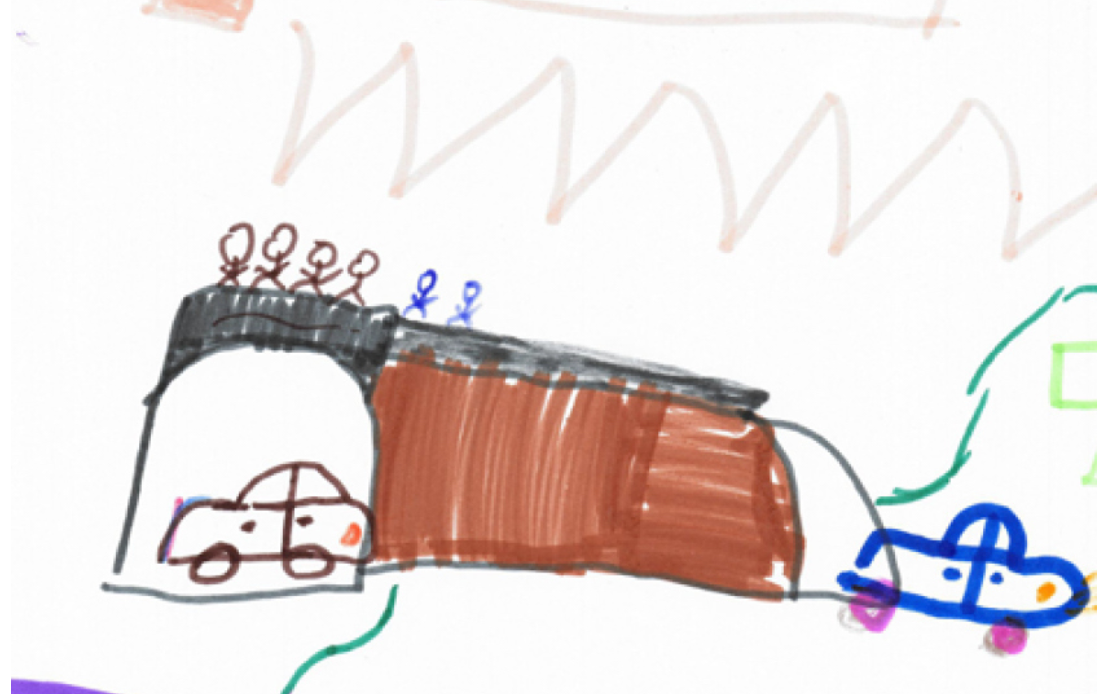
From the stairs at La Barre and the terrace above the Tunnel, children have a panoramic view of Place du Tunnel. Children seek out these vantage points because their view is often obstructed by elements that adults do not notice, such as bus stops, recycling bins, or trash cans, etc. The roof of the L’Akabane playground and the Ferris wheel in the adventure park are also designed for these same reasons.
Topography is thus used as a means of gaining perspective and understanding the context. Consequently, public spaces offering vantage points could attract more children and young people if they were better highlighted.
Presence of Vegetation
“There are no trees on Place du Tunnel.” This remark from a student at Collège de la Barre comes as no surprise, since the plane trees on the square are not on a human scale, and although their shade is welcome in the summer, the trees aren’t tied to any specific use—or at least aren’t associated with spending time in this public space.
Young people, for their part, are very interested in the potential changes to Place du Tunnel, which—unlike Place de la Riponne, and despite the prevalence of asphalt—is on bare ground and could therefore accommodate more vegetation. Greenery would offer two benefits: it would help combat the urban heat island effect, which is known to develop in cities, and it would brighten up the square and attract more people.
The wooded hillside, a link between Rue de la Borde, Place du Nord, and Le Vallon
Although Rue de la Borde leads to Place du Tunnel, their relationship is ambiguous, and they remain largely disconnected from one another, as they are linked only by narrow sidewalks that run along the building facades.
Many students at Collège de la Barre live on Rue de la Borde and have a closer connection to the small open spaces adjacent to Rue de la Borde than to Place du Tunnel. For them, Place du Tunnel is part of the neighborhood out of necessity; it lies on the route between their homes and the school, or between the Permanence Jeunes Borde and the playground at Place du Nord, the APEMS Primaflora, or the FASL center in Le Vallon.
However, despite the topography, children and the adults supervising them prefer to take the Chemin des Ecoliers rather than cross the Place du Tunnel. This wooded hillside overlooking the Place du Tunnel is often referred to as “the forest.” This wooded character, which evokes the nearby Bois de Sauvabelin, is also a significant asset in attracting children.
Share