




Children’s Perceptions: A Network of Facilities as Landmarks

Connecting to the broader context
The role of children within the project area must first be considered in relation to the broader context. In fact, meetings with children during the participatory process highlighted the importance of the network of neighborhood facilities that they use—or have used—on a daily basis:
the Collège de la Barre, overlooking Place du Tunnel,
youth and children’s centers (the PJB—Permanence Jeune Borde, the FASL—Fondation pour l’animation socioculturelle lausannoise du Vallon, and the Halte de jeux de la Grenette),
the playground at Place du Nord (the only large playground in the immediate vicinity)
the “Planète Bleue,” “La Chotte,” and “La Madeleine” daycare centers.
Detours
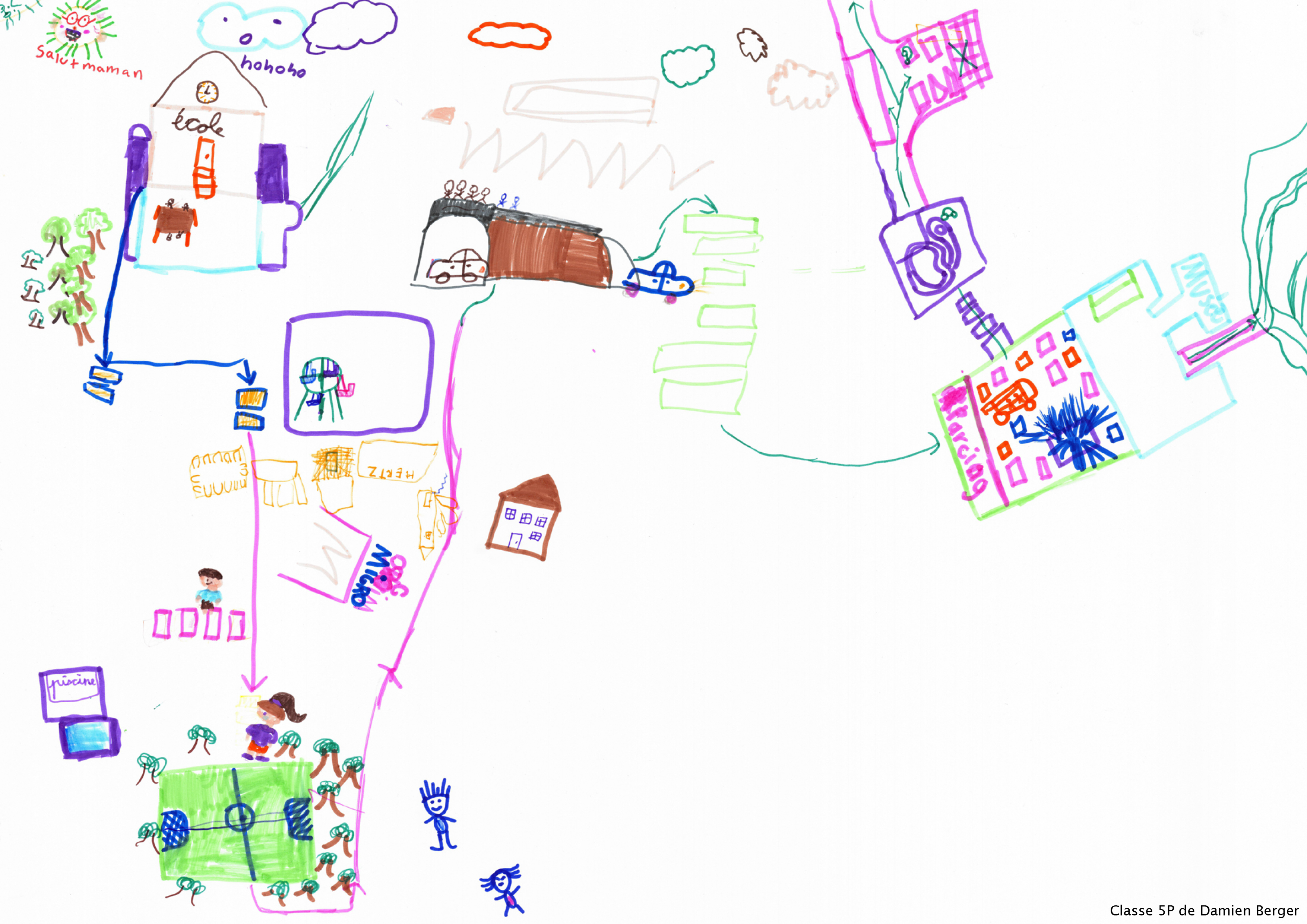
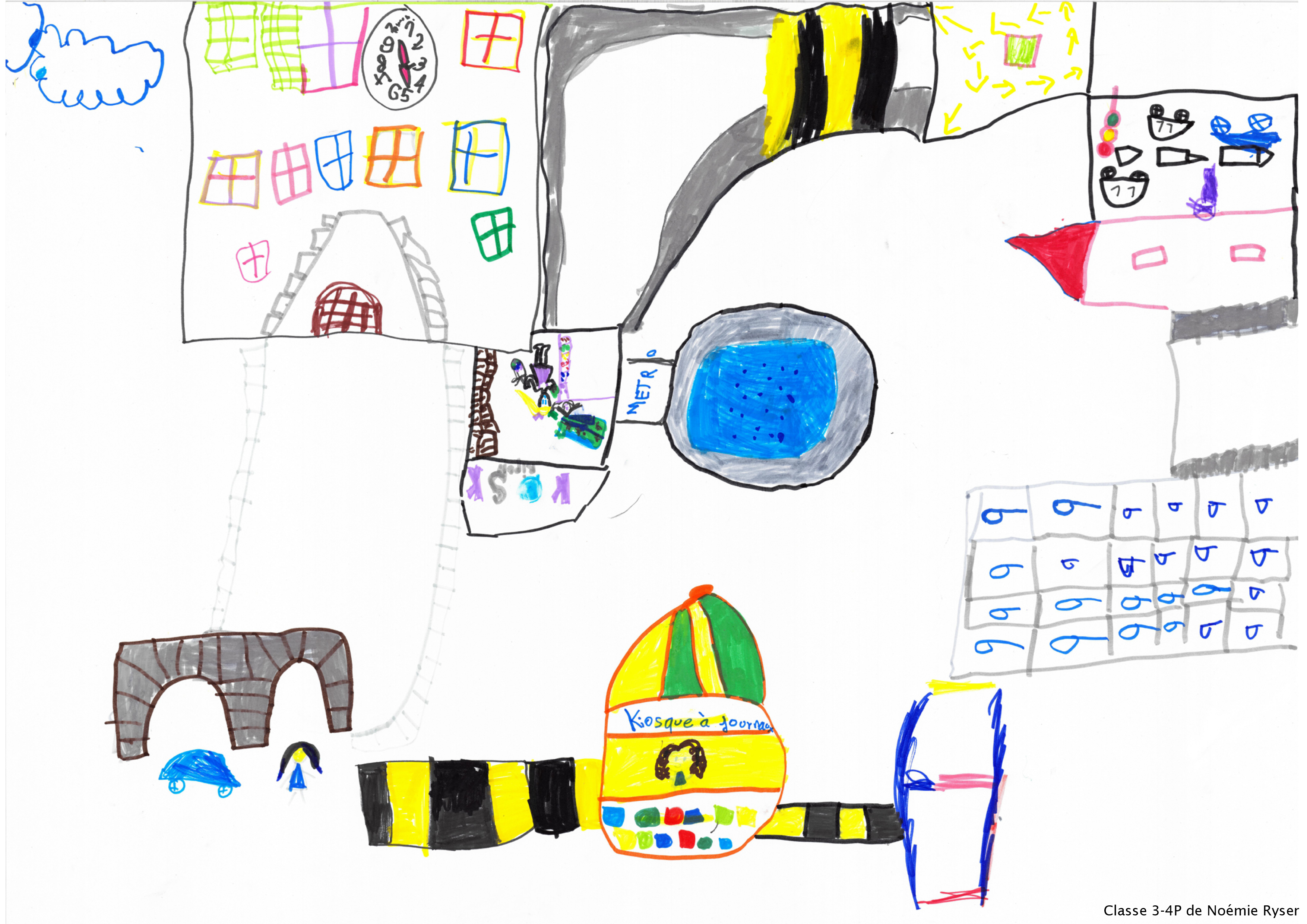
These facilities serve as landmarks around which children develop their own unique perception of the neighborhoods as they connect them on foot, taking detours. Thus, to avoid Place du Tunnel, they prefer to connect Rue de la Borde and Place du Nord via the “schoolchildren’s path,” which runs along the wooded hillside. This path is also used daily to reach Collège de La Barre. From Rue Saint Martin, some prefer to walk to school by taking the Tunnel stairs rather than going through the Tunnel itself. A little further on, the Sentier des Colombes and the stairs at the Palais de Rumine offer a viable route to Place de la Riponne. These daily routes are designed to be as pleasant, safe, and enjoyable as possible. Routes away from traffic—through the “forest” or “countryside,” in the warmth or in the company of taxidermied animals—are therefore preferred.
Punctuated and segmented pathways
Crosswalks, parking lots, kiosks, iconic buildings, and road edges are all elements that mark and structure their routes throughout the area. There is therefore not just a single destination to reach, but also a series of intermediate points that help organize the routes into distinct segments. The routes are thus segmented and easier for children to navigate, giving them a sense of security. These elements are detailed by theme in the articles identified through site analysis.
Little long-term engagement, but “micro-meeting places”
At the start and end of school and daycare hours, the presence of families temporarily creates “micro-meeting places.” However, the current layout does not particularly encourage children and their parents to linger in the area.
The Unifying Potential of Place du Tunnel
This is no longer the case once Tunnel Rêve de Vert takes over Place du Tunnel. From early July until the start of the school year—for the past 10 years—Place du Tunnel has been transformed into a neighborhood park. The adventure playground, developed by the Lausanne Foundation for Sociocultural Activities (FASL) and supported by the City of Lausanne, replaces the asphalt with wood chips and the parking lot with a green space and gathering area, featuring various workshops, games, and cooking stations. As part of this event, Place du Tunnel has demonstrated its ability to bring together the various organizations that serve children in the neighborhood—organizations that would otherwise remain deeply rooted in their own sectors and isolated from one another. “Tunnel Rêve de Vert” is therefore an opportunity to bring together children from the area and open them up to the outside world by attracting families from across the city.
Dialogues on Perceptions
Students at Collège de la Barre, working in groups of 4 or 5, created mind maps depicting a route from Place du Tunnel to Place de la Riponne, connecting locations they had chosen individually. This exercise sparked lively discussions, as the gaps between locations had to be filled in, the route discussed, and landmarks shared and pooled. The elements mentioned above and many of the themes addressed can be found in the articles tagged with #reading-the-places. Comparing these collaborative drawings with the “constellations and routes” map provides insights into the children’s perceptions of the area and its activities.
Share