




Constellations & Routes: Current Network of Places, Perceptions, and Daily Pathways of Young People

Highlighting the Current Network
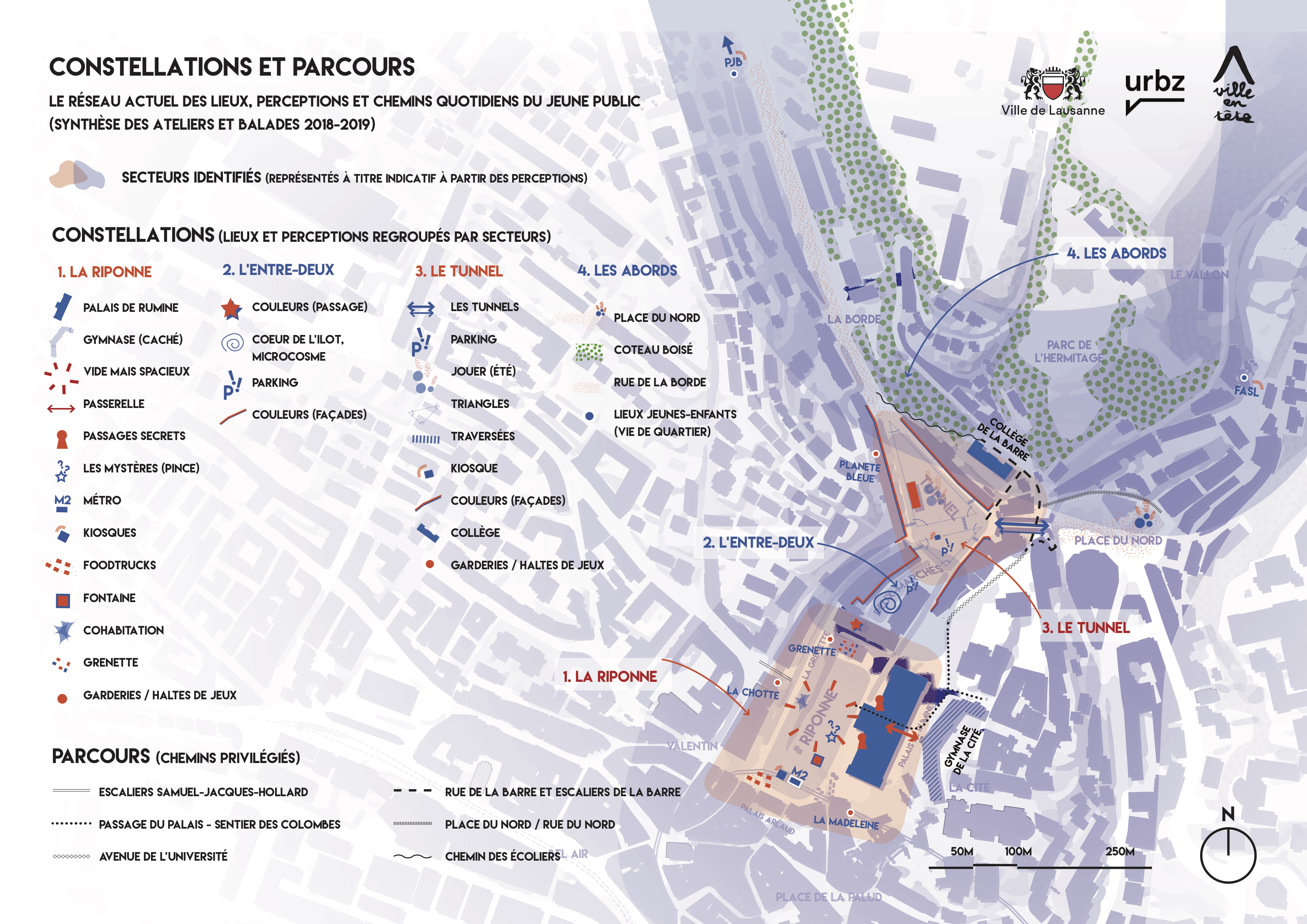
Based on the results gathered and the observations made, “Ville en tête” sought to highlight the current network of places, perceptions, and daily routes used by young people within the Riponne–Tunnel area: this revealed clusters of themes and preferred daily routes. The places, perceptions, and routes identified represent recurring patterns that emerged from the discussions and materials produced during the workshops and walking tours.
This overview, presented as a map, provides the key insights needed to understand how young people and children currently perceive and use these spaces.
Could the highlighted network be expanded, and could the realm of the imagination be further enriched?
The routes preferred by young users clearly illustrate some of the current shortcomings in terms of urban design in these vast spaces: they now prefer several paths on the outskirts of the area, despite the significant topography created by the valleys! How can we reverse this situation?
Riponne Tunnel: Unlocking Full Potential
In fact, children and young people are currently rarely seen in the public spaces of La Riponne and Le Tunnel, as these areas are neither suitable, attractive, nor safe—particularly due to the heavy traffic. As a result, young people today primarily view these spaces as places to pass through or as transportation hubs.
The current network of constellations and routes suggests that improving urban quality and the daily experience is possible. This would help expand the scope of this network and increase the number of potential places to spend time and routes to explore, so that children and young people can feel at ease there.
Creating the right conditions for greater ownership
Generally speaking, the goal is not to design spaces “for” young people, but rather to create the right conditions to enhance and increase their potential for engagement, so that young people and children can be naturally welcomed and invited to stay, just like other users.
Share